Thermal & Fluid Science Laboratory
March 15, 2024Artificial Intelligence Lab
November 4, 2020
The Big Data Laboratory is a supporting facility for final projects, research, and academic initiatives focused on managing and visualizing large-scale data. It is equipped with two computers and a high-specification server.
In addition, the laboratory features a large display window to present analysis results clearly and comprehensively. This environment enables students and lecturers to develop data-driven solutions efficiently and accurately. Various professional software tools such as Jupyter Notebook, Tableau, Power BI, and Google Colab further support data exploration, making this lab a hub of innovation aligned with industry and societal needs.
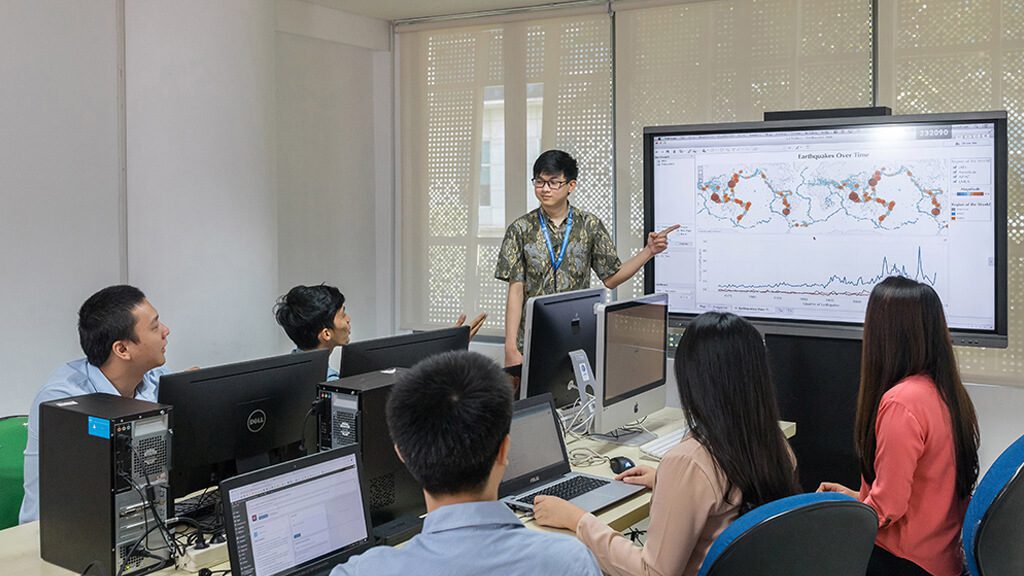
The UMN Big Data Lab is designed to support the entire data processing workflow for end-users—from data collection, storage, and processing to visualization. The available facilities include:
- High-Performance Computing (HPC) Cluster
Equipped with GPUs to support advanced data analysis involving machine learning and deep learning for forecasting and predictive tasks. The server features multi-core processors and large memory capacity optimized for parallel processing.
- Large-Scale Storage Capacity
A storage system with high capacity to accommodate data from various sources. It supports distributed storage systems for efficient data management.
- Big Data Frameworks
Platforms such as Anaconda, Jupyter Notebook, Python, VS Code, and RStudio for both real-time data processing and batch processing.
- Business Intelligence Tools
Data visualization tools such as Tableau, with interactive dashboards to support dynamic analysis and reporting.
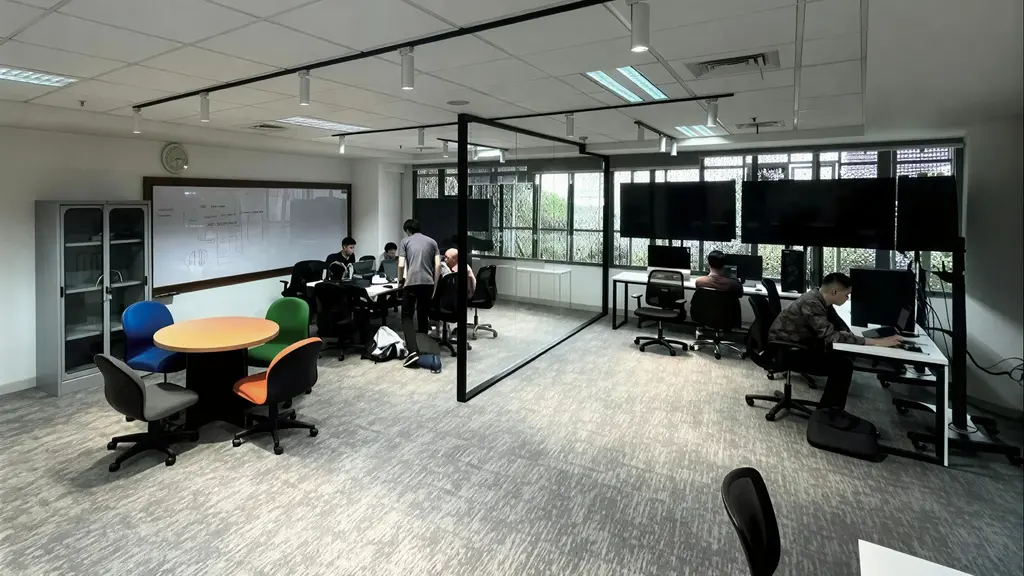
- Collaboration and Presentation Space
Equipped with smart displays and comfortable group work areas to support discussions, presentations, and interdisciplinary brainstorming.
Recent Projects:
- Optimizing Retrieval-Augmented Generation Through Agentic RAG Ecosystem Based on Fine-Tuned BERT Cross Encoder and GPT-4 Model
- From Waves to Vision: Transforming Heart Sound Classification with Wav2Vec 2.0 and Vision Transformers
- Discovering Mental Health-Related Communities in Social Networks through Graph-Based Greedy Modularity Detection and BERTopic
- Accelerated Training of Swin Transformer V2 Models for Facial Expression Recognition via Mixed Precision
- U-Net–Based Pixelwise Smoke Detection in Low-Altitude UAV Image