Department of Journalism and Content Creation
What is Journalism?
The Department of Journalism and Content Creation prepares graduates as Digital Information and Content Professionals who are capable of managing the entire digital information and content lifecycle, from information discovery, verification, production, and multimedia storytelling to the strategic distribution of credible and engaging content across multiple digital platforms.
Through experiential and project-based learning, students develop competencies in journalism, content creation, multimedia production, audience engagement, data-informed content strategies, and emerging digital media technologies to serve the evolving information needs of contemporary society.

Why Choose
UMN’s Journalism?
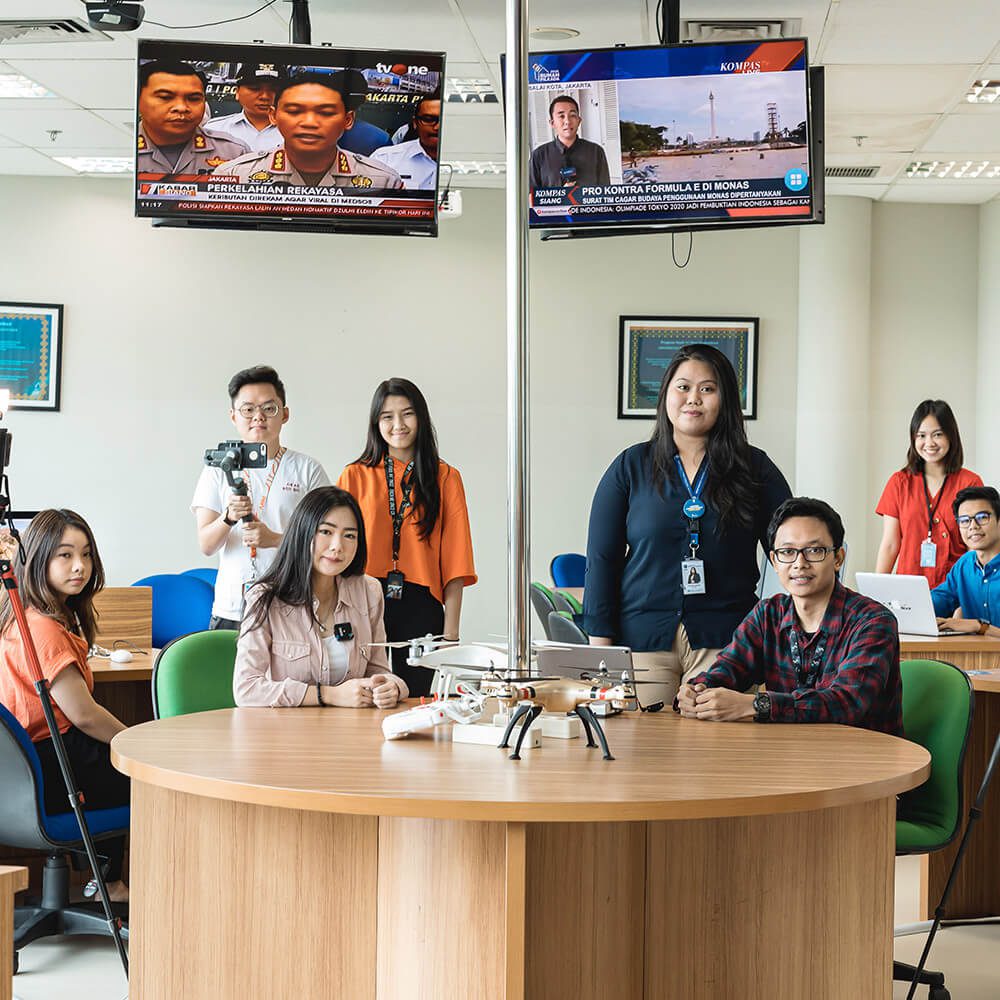
Multimedia Nusantara University’s Journalism Study Program focuses on utilizing new technologies to learn new forms of journalism. Therefore, learning activities are also supported with adequate technology. Some courses are also tailored to the needs of the industry as well as the development of existing technologies, such as mobile and social media journalism courses that utilize the use of gadgets in producing and disseminating journalistic products through social media.
In addition, UMN’s Journalism Study Program also equips its students with the knowledge about hoax news (HOAKS) and ways to identify them through digital factchecking courses. Besides that, through web apps for journalism courses, students will also be taught how to create a website to be able to publish journalistic products that have been created independently.
Kompas Gramedia supports UMN in providing access to teachers from media industry who are experienced, able to provide knowledge about the current conditions of the media industry and serve a source for students to practice directly.
FAQ
The Digital Journalism Study Program at Universitas Multimedia Nusantara (UMN) is the right choice for prospective students who aspire to build careers in the media and digital communication industry. This study program equips students with journalism competencies that are relevant to technological advancements, changing audience behavior, and the evolving needs of the media industry. Through an adaptive curriculum, practice-based learning, and quality recognition through ACQUIN international accreditation, students are prepared to become professional, innovative digital journalists who produce accurate, credible, and impactful journalism for society.
The curriculum of the Digital Journalism Study Program at UMN is designed to keep pace with the development of the digital media ecosystem and current industry needs. Students learn the fundamentals of journalism, including news reporting techniques, news writing, interviewing, and journalistic ethics. In addition, students develop essential digital-era skills such as multimedia storytelling, mobile journalism, data journalism, visual journalism, video production, podcasting, photojournalism, and content distribution strategies across various digital platforms. This approach enables students to produce journalistic content that effectively reaches audiences across multiple media channels.
In addition to developing technical competencies, learning in the Digital Journalism Study Program at UMN also focuses on current issues shaping the media industry. Students gain an understanding of the application of Artificial Intelligence (AI) in journalism, information verification and fact-checking, digital security, personal data protection, ethical technology use, and the challenges posed by hoaxes, misinformation, and disinformation. As a result, graduates are not only able to utilize technology in the news production process but also possess critical thinking skills and uphold journalistic integrity in today’s rapidly evolving digital landscape.
The Digital Journalism Study Program at UMN implements experiential learning, enabling students to develop their competencies through various projects, news coverage simulations, multimedia content production, and collaborations with industry partners. Throughout their studies, students are supported by a wide range of facilities that enhance modern journalism practice, including television studios, radio studios, newsrooms, multimedia laboratories, and digital content production equipment. Students are also guided by lecturers from both academia and the media industry, ensuring that the learning process remains aligned with the latest professional developments.
UMN’s commitment to maintaining educational quality is demonstrated through the ACQUIN (Accreditation, Certification and Quality Assurance Institute) international accreditation awarded to the Digital Journalism Study Program. This international accreditation indicates that the program’s curriculum, learning process, study program governance, and graduate outcomes meet globally recognized higher education standards. With this foundation, graduates of the Digital Journalism Study Program at UMN possess a stronger competitive advantage to pursue careers in the media, communication, and other creative industries, both nationally and internationally.
Interested in becoming part of a generation of adaptive, creative digital journalists who are ready to face the future of the media industry?
The Digital Journalism Study Program at UMN welcomes prospective students who aspire to develop journalism competencies while mastering the digital technologies required in today’s professional world. Prospective students can apply through the UMN New Student Admission (PMB) website by selecting the appropriate admission pathway, completing the registration information, uploading the required documents, and completing all stages of the admission process through registration. Join the Digital Journalism Study Program at UMN and take the first step toward a career as a digital journalist who is ready to meet the challenges of the future media industry.
The Digital Journalism Study Program at Universitas Multimedia Nusantara (UMN) is offered through two study tracks: the Regular Program and the International Program. This approach helps students strengthen their cross-cultural communication skills while preparing them for careers in the global media industry and multinational organizations.
In addition to using English as the language of instruction, students in the International Program also have opportunities to participate in various international activities organized by UMN in collaboration with partner universities abroad. These opportunities may include student exchange programs, international collaborative projects, guest lectures with academics and practitioners from different countries, and cross-cultural learning programs. These experiences provide students with broader insights into journalism practices around the world while strengthening their international networks.
Both the Regular Program and the International Program implement a curriculum that is adaptive to developments in the digital media industry. Students in both programs benefit from experiential learning through journalism projects, multimedia content production, newsroom simulations, and the use of UMN’s modern facilities, including television studios, radio studios, newsrooms, multimedia laboratories, and various digital production equipment. All students are also guided by lecturers from both academia and the media industry, ensuring that the learning materials remain relevant to the needs of the professional world.
The quality of the Digital Journalism Study Program at UMN has also been recognized through ACQUIN (Accreditation, Certification and Quality Assurance Institute) international accreditation. This recognition demonstrates that the curriculum, learning process, study program governance, and graduate outcomes meet international higher education standards. Therefore, students in both the Regular Program and the International Program receive the same quality of education, with the primary difference being the learning experience and the level of international exposure they gain throughout their studies.
Choosing between the Regular Program and the International Program depends on each prospective student’s academic goals and career aspirations. For those who wish to gain a learning experience focused on the national media industry while maintaining opportunities for a global career, the Regular Program is an excellent choice. Meanwhile, prospective students who aim to improve their English proficiency, broaden their international experience, and build a global network from the beginning of their university journey may find the International Program to be the more suitable option.
More information about the Digital Journalism Regular Program and International Program at UMN, including the curriculum, admission requirements, and application pathways, is available on the UMN New Student Admission (PMB) website or the official Digital Journalism Study Program website.
The primary difference between journalism and Digital Journalism lies in the scope of learning and the approach to the evolving digital media landscape. Journalism focuses on the process of gathering, processing, verifying, and delivering information to the public in accordance with journalistic principles. Meanwhile, the Digital Journalism Study Program at Universitas Multimedia Nusantara (UMN) expands these competencies by integrating digital technology, multimedia, and content distribution strategies to meet the needs of today’s media industry.
In the Digital Journalism Study Program at UMN, students continue to learn strong journalistic foundations, including news reporting techniques, interviewing, news writing, fact verification, and journalistic ethics. Mastering these fundamentals equips students with the skills needed to produce accurate, balanced, and accountable information. Journalistic values remain at the core of the curriculum, even as the media ecosystem continues to evolve.
What distinguishes Digital Journalism is its learning approach, which is oriented toward digital platforms and technological advancements. Students not only learn how to write news but also develop the ability to produce multimedia content in various formats, including news videos, podcasts, infographics, photojournalism, visual storytelling, and social media content. In addition, students study multimedia storytelling, mobile journalism, data journalism, visual journalism, and content distribution strategies across various digital platforms to ensure that information reaches audiences more effectively.
The curriculum of the Digital Journalism Study Program at UMN is also designed to keep pace with current issues in the media industry. Students learn about the application of Artificial Intelligence (AI) in journalism, information verification (fact-checking), digital security, personal data protection, ethical use of technology, and the challenges posed by hoaxes, misinformation, and disinformation. As a result, graduates are not only capable of producing high-quality journalistic work but are also well prepared to adapt to the ongoing technological changes within the media industry.
The Digital Journalism Study Program at UMN implements an experiential learning approach, allowing students to gain practical experience from the beginning of their studies. Various journalism projects, newsroom simulations, multimedia content production, and collaborations with industry partners are integral parts of the learning process. Students are also supported by comprehensive facilities, including television studios, radio studios, newsrooms, multimedia laboratories, and various digital production equipment that foster the development of professional skills.
The educational quality of the Digital Journalism Study Program at UMN is further strengthened by its ACQUIN (Accreditation, Certification and Quality Assurance Institute) international accreditation. This recognition demonstrates that the curriculum, learning process, study program governance, and graduate outcomes meet internationally recognized higher education standards. This serves as added value for students as they build careers in the increasingly competitive media industry.
Through the combination of strong journalistic foundations, mastery of digital technologies, and learning that continuously adapts to industry developments, the Digital Journalism Study Program at UMN prepares students to become journalists and media professionals who are adaptable to the changing times. Graduates are not only able to deliver accurate and ethical information but are also ready to drive innovation within the ever-evolving digital media ecosystem.
The Digital Journalism Study Program at Universitas Multimedia Nusantara (UMN) equips students with the knowledge and skills needed to become digital journalists and media professionals who are able to adapt to technological advancements. The curriculum is designed to combine the fundamentals of journalism, digital technology proficiency, multimedia content production, and an understanding of communication issues that continue to evolve at both the national and global levels.
During the early stages of the program, students learn the fundamental principles of journalism that serve as the foundation for producing accurate and credible information. The curriculum covers news reporting techniques, interviewing, news writing, copy editing, fact-checking, media law and ethics, and an understanding of the role of the media in society. This learning experience aims to develop journalists who uphold integrity, accuracy, and responsibility in delivering information to the public.
As they progress through the program, students begin to develop the digital competencies required by today’s media industry. The Digital Journalism Study Program at UMN teaches multimedia storytelling, mobile journalism, data journalism, photojournalism, videography, podcast production, visual journalism, and content distribution strategies across various digital platforms. Students also learn how to package information in different formats to effectively reach audiences without compromising the quality or accuracy of the information.
In addition to technical competencies, the curriculum also focuses on current issues in the fields of media and communication. Students gain an understanding of the application of Artificial Intelligence (AI) in journalism, digital security, personal data protection, the ethical use of technology, and the challenges posed by hoaxes, misinformation, and disinformation. By studying these issues, students are expected to think critically about the use of technology while maintaining journalistic values amid the changing digital media landscape.
The Digital Journalism Study Program at UMN implements an experiential learning approach that enables students to develop their competencies through hands-on practice. Throughout their studies, students work on various journalism projects, news coverage simulations, multimedia content production, and interdisciplinary collaborations that reflect professional workflows in the media industry. These experiences help students build strong professional portfolios while they are still pursuing their studies.
To support the learning process, UMN provides various facilities that enhance digital journalism practice, including television studios, radio studios, newsrooms, multimedia laboratories, and digital content production equipment. Students are also guided by qualified lecturers consisting of both academics and industry practitioners with extensive experience in the media and communication industries, as well as proven records of international academic activities and collaborations. This combination of academic, professional, and global experience ensures that the curriculum remains aligned with the latest developments in the media industry while providing students with broader perspectives in addressing the challenges of digital journalism.
UMN’s commitment to maintaining educational quality is demonstrated through the ACQUIN (Accreditation, Certification and Quality Assurance Institute) international accreditation awarded to the Digital Journalism Study Program. This accreditation indicates that the curriculum, learning process, study program governance, and graduate outcomes meet internationally recognized higher education standards. With this quality of education, students gain learning experiences that are relevant to industry needs while developing stronger competitiveness at both the national and global levels.
Through a combination of theory, practice, digital technology utilization, and learning that continuously adapts to industry developments, the Digital Journalism Study Program at UMN prepares students to become adaptive, creative digital journalists who are ready to face the challenges of the future media industry. Interested in joining? Prospective students can apply through the UMN New Student Admission (PMB) website by selecting the appropriate admission pathway, completing the registration information, uploading the required documents, and completing all stages of the admission process through registration. Together with the Digital Journalism Study Program at UMN, take the first step toward a career in the media and digital communication industry.
Graduates of the Digital Journalism Study Program at Universitas Multimedia Nusantara (UMN) have broad career opportunities as the media, communication, and creative economy industries continue to grow. Changes in the way people access information, along with the rapid advancement of digital technology, have significantly increased the demand for professionals who can produce high-quality, accurate, and relevant content. Through an adaptive curriculum that is aligned with industry needs, the Digital Journalism Study Program at UMN prepares its graduates to pursue careers across various sectors at both the national and international levels.
Throughout their studies, students develop a strong foundation in journalism, including news reporting techniques, news writing, interviewing, fact-checking, and journalistic ethics. In addition, students build competencies in multimedia storytelling, mobile journalism, data journalism, photojournalism, videography, podcast production, visual journalism, and digital content distribution strategies. These competencies enable graduates to adapt to the evolving demands of the media industry.
Graduates of the Digital Journalism Study Program at UMN have career opportunities as journalists in print, television, radio, and online media. In addition, the growth of the digital industry has created opportunities for graduates to pursue careers as multimedia journalists, content producers, video journalists, data journalists, podcast producers, digital content editors, content strategists, social media specialists, communication officers, public relations specialists, and copywriters across companies, institutions, organizations, and creative industries. The ability to produce informative, engaging, and data-driven content is a valuable asset across a wide range of professions.
To prepare students for the professional world, the Digital Journalism Study Program at UMN implements an experiential learning approach through various projects, newsroom simulations, multimedia content production, and collaborations with industry partners. Students are also guided by qualified lecturers consisting of both academics and industry practitioners with professional experience in the media industry and strong international track records. As a result, graduates not only possess strong technical competencies but also understand the dynamics of the professional world and the ongoing developments within the global media industry.
The educational quality of the Digital Journalism Study Program at UMN is further strengthened by its ACQUIN (Accreditation, Certification and Quality Assurance Institute) international accreditation. This recognition demonstrates that the curriculum, learning process, study program governance, and graduate outcomes meet internationally recognized higher education standards. This achievement provides graduates with added value as they build careers in the increasingly competitive media and communication industries.
The success of graduates from the Digital Journalism Study Program at UMN is also reflected in the achievements of its alumni, who have built careers in various national media organizations, technology companies, creative industries, communication agencies, government institutions, and non-profit organizations. Many alumni work as journalists, content producers, digital communication specialists, and professionals in communication strategy and media. The combination of theoretical knowledge, practical experience, and exposure to technological developments provides graduates with the foundation needed to adapt to the continuously evolving demands of the professional world.
Through a relevant curriculum, practice-based learning, guidance from experienced lecturers, and quality recognition through ACQUIN international accreditation, the Digital Journalism Study Program at UMN prepares graduates who are not only ready to enter the workforce but are also equipped to become adaptive, innovative, and ethical media professionals. With these competencies, graduates are well positioned to contribute to building a credible information ecosystem while addressing the challenges of the future digital media industry.
National Accreditation
General Information
| Credits | 241.92 (ECTS) / 144 (SKS) |
| Education Type | Bachelor Program |
| Duration | 4 years |
| Language | Indonesia & English |
| Bachelor's Degree | Bachelor of Communication Science (S.I.Kom.) |
| Type of Program | Full-time |
Vision & Mission
Vision
To become a Multimedia Journalism Undergraduate Study Program that is excellent in exploring new forms of journalism and producing graduates who are internationally minded, able to master the theory and practice in the field of journalism based on Information and Communication Technology (ICT), and possess entrepreneurial spirit, as well as noble character.
Mission
- Organizing an experiential learning process that has high quality and virtue, supported by professional teachers and curriculum that is in line with the development of journalism and ICT.
- Carrying out research programs in the field of multimedia journalism that contribute to the development of journalism.
- Carrying out community service activities related to the field of multimedia and journalism.
Career Prospect
Graduates of the Journalism study program can pursue careers across various fields, including journalism and information, content creation and storytelling, multimedia and audiovisual, as well as audio and creative communication. Some of the potential graduate profiles include:
Digital Journalist, Investigative and Fact-Checking Specialist, Media and Information Verifier, Data and Audience Analyst, Digital Content Creator, Content Producer and Editor, Narrative and Creative Storyteller, Social Media Content Strategist, Multimedia Producer, Audio-Visual Producer, Documentary Filmmaker, Photographer, Audio Storytelling Producer, Podcast Producer, Voice Over Artist, and Audio Content Specialist.
Further Study
Graduates of UMN’s Journalism Study Program can continue their studies in the field of communication, public relations, and other social sciences.
Partnership & Collaborations
UMN’s Journalism Study Program has been working with several media in Indonesia such as Kompas Gramedia Group, Tempo, SCTV, CNN TV, and other national media outlets to obtain resources and provide real experience for students in the media industry.
We have also networked with the Press Council and some communities such as the Alliance of Independent Journalists (AJI) and Jurnokoders in the creation of several programs related to journalistic learning.
In the international sphere, UMN’s Journalism Study Program collaborates with Google, especially in the Google News Initiative and the International Federation of Journalists (IFJ) in organizing different activities. UMN’s Journalism Study Program also collaborates with UNESCO that contributes to the curriculum used. In addition, we also cooperate in several other activities, one of which is our involvement in the implementation of world press Freedom Day.
Student Scholarship
UMN scholarship program is offered to high school students in 12th grade who have academic, sports, and artistic achievements while in 11th grade. In addition, UMN also offers the program to high school/vocational school students who won medals in the National and International Science Olympics. As a form of appreciation for the dedication of teachers and employees/ staff in educating the nation's children, UMN provides scholarships in the form of a 50% reduction in fees for teachers/principals and a 30% reduction in fees for children of the employees/staff in high schools/vocational schools (both public and private) who want to continue their education at UMN.
Entry Requirement
- High school graduate majoring in Science, Social Sciences or Languages
- Vocational school graduates of various majors.
Students are required to attend academic guidance meetings at least 3 times per semester. The schedule of the meetings will be provided by the respective academic supervisors. Students have to bring the academic guidance book for the meeting and they need to make sure that the academic supervisor signs it.
Continuing Education Department (CED) is an educational development program at Universitas Multimedia Nusantara (UMN) which is part of the Kompas Gramedia Group. We have various programs in language courses, human development, Testing Centers for national and international certifications, and training programs. UMN’s CED is designed to meet the needs of high school and college students, as well as the public and professionals.
Students are encouraged to find their own companies / agencies for their internships that align with the focus of the Strategic Communication Study Program. Information about available internships can be obtained from other students, social media, job fairs, advertisements in print or electronic media or even through the UMN Career Development Center (CDC).
To complete the Undergraduate Program (S-1) at Multimedia Nusantara University, students must prepare, present, and defend the thesis in front of the thesis examination board, in accordance with the provisions of the study program. The preparation of the thesis is done individually and the students can choose the supervisor directly provided that the selected supervisor agrees.
To complete the Undergraduate Program (S-1) at Multimedia Nusantara University, students must prepare, present, and defend the thesis in front of the thesis examination board, in accordance with the provisions of the study program. The preparation of the thesis is done individually and the students can choose the supervisor directly provided that the selected supervisor agrees.
| Semester | Type | COURSE PLAN | |
| CODE | COURSE | ||
| 1 | Compulsory | UM 122 | English 1 |
| 1 | Compulsory | UM 162 | Pancasila |
| 1 | Compulsory | UM 163 | Civic |
| 1 | Compulsory | JR 112 | Introduction to Journalism |
| 1 | Compulsory | UM 152 | Religiosity |
| 1 | Compulsory | FK 302 | Interpersonal Communication Skill |
| 1 | Compulsory | FK 205 | Bahasa Indonesia for Communication |
| 1 | Compulsory | FK 100 | Introduction to Communication Science |
| 2 | Compulsory | JR 101 | Media Writing |
| 2 | Compulsory | JR 317 | Interview and Reportage |
| 2 | Compulsory | FK 215 | Digital Videography |
| 2 | Compulsory | JR 215 | Photo Journalism |
| 2 | Compulsory | FK 110 | Critical and Creative Thinking |
| 2 | Compulsory | JR 251 | Media Ethics and Law |
| 2 | Compulsory | JR 102 | Narrative Storytelling |
| 3 | Compulsory | JR 108 | Data-driven Storytelling |
| 3 | Compulsory | JR 105 | Audio storytelling |
| 3 | Compulsory | JR 104 | Video Program Production |
| 3 | Compulsory | JR 103 | Indepth and Investigative Reporting |
| 3 | Compulsory | JR 109 | Mobile and Social Media Content Production |
| 3 | Compulsory | JR 107 | Interactive Media Storytelling |
| 3 | Compulsory | JR 106 | Digital Content Production |
| 4 | Compulsory | JR 553 | Media Research Quantitative Methods |
| 4 | Compulsory | JR 654 | Media Research Qualitative Methods |
| 4 | Compulsory | FK 201 | Communication Theory |
| 4 | Compulsory | FK 513 | Academic Writing |
| 4 | Compulsory | JR 652 | Media Studies |
| 4 | Compulsory | JR 637 | Digital Media Management |
| 4 | Compulsory | JR 113 | Media and Intercultural Issues |
| 5 | Compulsory | JR 214 | History of Journalism |
| 5 | Compulsory | JR 411 | English for Journalism |
| 5 | Compulsory | JR 111 | Global Media |
| 5 | Compulsory | JR 349 | Media and Politics |
| 5 | Compulsory | JR 119 | Reporting Bussiness |
| 5 | Compulsory | JR 117 | Media and Environment |
| 5 | Compulsory | JR 538 | Documentary Journalism |
| INTERNSHIP | |||
| 6 | Compulsory | JR 671 | Professional Business Ethics |
| 6 | Compulsory | JR 672 | Industry Experience |
| 6 | Compulsory | JR 673 | Industry Model Validation |
| 6 | Compulsory | JR 674 | Evaluation and Reporting |
| 7 | Compulsory | JR 755/JR 756 | Research proposal Seminar in Journalism or Seminar on Final Project Proposal |
| 7 | Elective | Elective Course | |
| 7 | Elective | Elective Course | |
| 7 | Elective | Elective Course | |
| 7 | Elective | Elective Course | |
| 7 | Elective | Elective Course | |
| 8 | Compulsory | JR 857/JR 858 | Undergraduate Thesis (Study-based) or Undergraduate Thesis (Project-based) |
| Option for Elective Courses: | |||
| 7 | Elective | JR 115 | Media and Humanitarian perspective |
| 7 | Elective | JR 118 | Reporting Sports |
| 7 | Elective | JR 116 | Media and Social Diversity |
| 7 | Elective | JR 6410 | Reporting on Science and Techlonogy |
| 7 | Elective | JR 114 | Entertainment Content production |
| 7 | Elective | JR 332 | News Graphic and Design |
| 7 | Elective | JR 661 | Digital Fact-Checking |
| 7 | Elective | JR 121 | Reporting on Health |
| 7 | Elective | JR 662 | Digital Media Business |
The Journalism Study Program aims to produce graduates who are able to work as multiplatform journalists, multimedia content producers, and researchers in the field of convergence journalism. The study program offers a curriculum for journalism students with strong journalistic competencies based on national guidelines on higher education and the association of communication science higher education or ASPIKOM as well as international journalism curriculum standards.
Through hands-on experiential learning methods equipped with modern library facilities, and digital collaborative laboratory infrastructures, students are invited to explore new forms of journalism, such as virtual reality journalism, augmented reality journalism, data journalism, drone journalism, visual journalism, mobile journalism, and others. Furthermore, the curriculum study program aims to:
- Produce professional multiplatform journalists and learners who are able to apply fact-based multimedia journalism knowledge that is independent, ethical, creative, analytical, and has skills in evaluating, developing, reviewing, and producing journalistic and other fact-based works.
- Produce professional media practitioners and learners who have independent, ethical, critical, creative, and entrepreneurial multimedia journalism knowledge to develop, review, and produce factual-based journalism works.
Produce professional individuals and learners who have an independent, ethical, creative, critical, and analytical attitude in evaluating, developing, reviewing, and producing journalistic and other fact-based works
|
ELO CODE |
KEYWORDS |
ELO DESCRIPTION |
| ELO 1 | lifelong learner, self-reliant, religious, ethical | Able to become a lifelong learner who has a spirit of independence in accordance with religiosity and ethical values. |
| ELO 2 | humanity, environment, law | Able to contribute to society that upholds human values, the environment, and the rule of law. |
| ELO 3 | responsibility | Able to be responsible for the journalistic work produced in accordance with the rules and useful for the community. |
| ELO 4 | theories & concepts, communication, journalism, relevant sciences | Able to demonstrate knowledge, theories and concepts in the fields of communication, basic journalism, and relevant sciences well. |
| ELO 5 | knowledge, implementation of communication theory, journalism, national/global issues | Able to demonstrate knowledge of the implementation of communication and journalism theories to address issues at the national and international levels. |
| ELO 6 | logical, critical, innovative, analytical thinking, fact-based work | Able to think logically, critically, and innovatively based on data analysis in producing journalistic works or other fact- based works for the media. |
| ELO 7 | media management, collaboration, fact- based work | Able to apply the knowledge in the field of media management and able to collaborate in groups in producing journalistic works and other fact-based works for the media. |
| ELO 8 | Entrepreneurship principle and application, production management, ICT-based | Able to apply the principles of entrepreneurship and production management of journalistic works and other fact-based works that utilize ICT technology. |
| ELO 9 | scientific research, analysis, media- journalism industry | Able to conduct research in the field of journalism according to scientific principles by prioritizing the usefulness of research for the development of the media industry, community empowerment, and analysis of links between various fields of science and journalism. |
| ELO 10 | journalistic/factual- based production, innovative, ICT- based | Able to produce journalistic works or innovative fact-based works by utilizing ICT technology. |
Graduates of this study program are expected to become multi-platform journalists, producers of multimedia content, and researchers in the field of media and journalism. The journalism graduates will be:
- Individuals who have knowledge in the field of fact-based multimedia journalism utilizing digital technology.
- Individuals who have an independent, ethical, critical, analytical, creative, and entrepreneurial attitude to develop factual-based works.
- Individual learners who have the skills to evaluate, develop, review, and produce journalistic and other fact-based works.
| Location of the study program or HEI site(s)/location where the program is provided | Tangerang, Indonesia |
| Faculty/Department | Faculty of Communication |
| Academic Degree | Bachelor of Journalism |
| Date or planned date of introduction |
13.09.2016 (Decree Number 387/KPT/I/2016) 2016/2017 Academic Year (First Cohort) |
|
Status last national accreditation (incl. result) Status last int. accreditation (incl. result) |
Accredited by BAN-PT No. 4451/SK/BAN-PT/Ak.Ppj/S/X/2023. According to BAN-PT the study program has met the quality of higher education standards (B). |
| Subject field | Journalism |
| Regular study duration | 8 semesters or 4 years |
| Number of (ECTS) credits | 144 SKS (241,92 ECTS) |
| Enrollment period(s) | Odd semester |
| Frequency of the offered program | 1 in year |
| Capacity per year | 120 |
| Number of students currently enrolled | 519 |
| Average number of graduates per year | 117 (2017-2021) |
| Target group(s) | Students with social science and general background |
| Admission requirements |
|












To support the learning process, umn provided a complete and sophisticated college facility, according to industrial standards. Through the existence of the facility, students have been invited to be close to the industrial world since sitting in college and to have competence that matches the needs of the industry. That way, it will make it easier for umn students to find jobs, even before graduation.

Communication Science Undergraduate Program (CSUP) prepares students by integrating ICTs in the teaching-learning process such […]
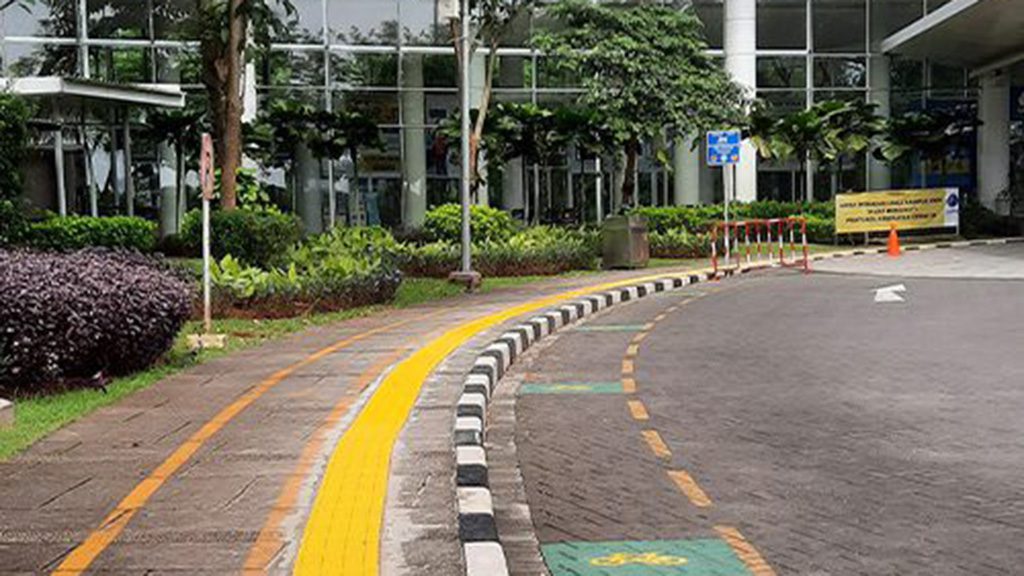
UMN is committed to creating an inclusive and supportive learning environment for all students. The […]

Collabo Space is a room provides space for students to perform various practical acts in […]

This collaborative space is used to explore the understanding of individuals or groups through the […]

This studio is specifically designed according to the operational standards of television broadcasting so that […]

A laboratory equipped with technological tools that can help students hold discussions and design concepts. […]

Narra Space is a multifunctional room that blends natural and modern elements. It features a […]

Content Hub is a revitalized version of the former newsroom, designed to provide a spacious […]

UMN RADIO 107.7 FM is a broadcast that is streamable on radio.umn.ac.id. This is a […]
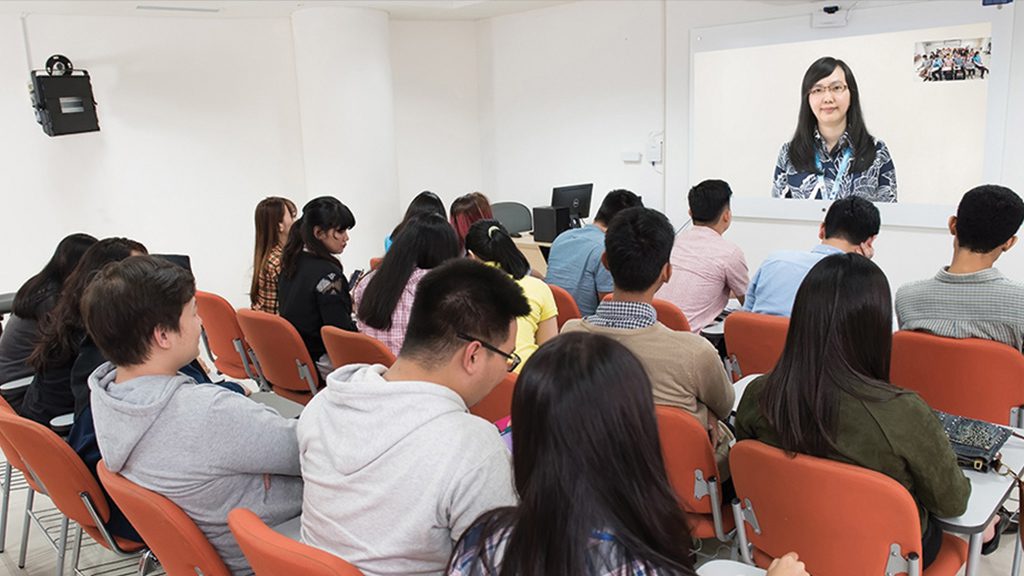
UMN is committed to advancing digital and online learning as an integral part of its […]
Extracurricular Student Activities
In order to help students explore and develop their non-academic potentials, UMN also provides a variety of extra-curricular activities for students which is locally called UKM, Student Activity Unit.
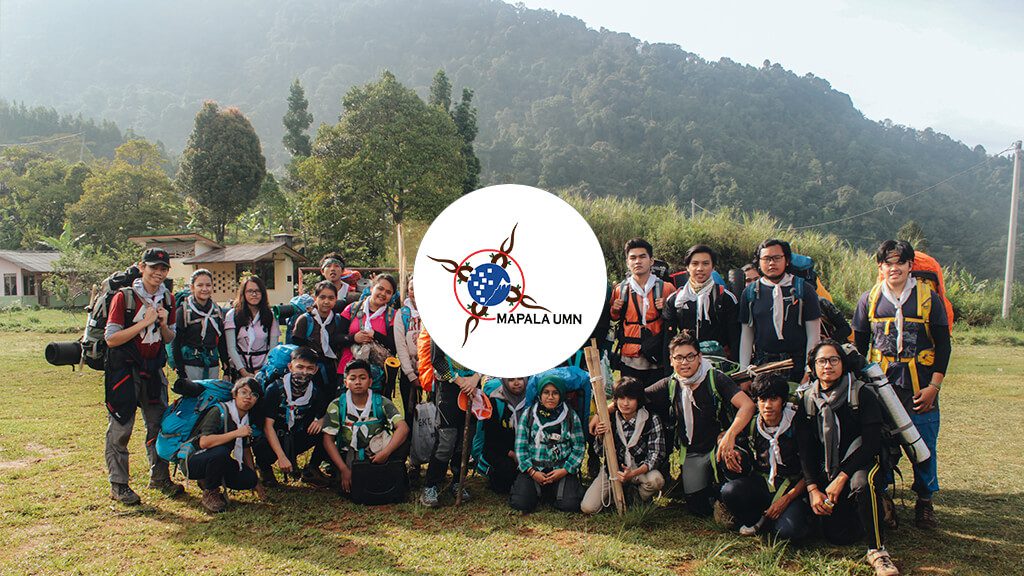
Student who are Nature Lovers in University Multimedia Nusantara can join and participate in UMN’s […]

Ultima Sonora is the Universitas Multimedia Nusantara Choir ensemble which has been established since 2007. […]
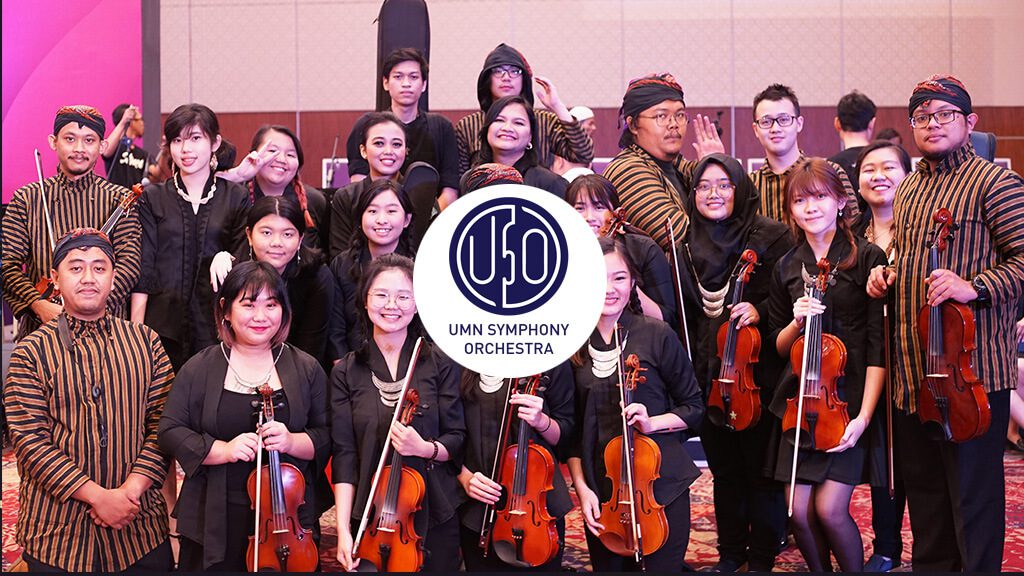
UMN Symphony Orchestra (USO), is one of the arts and culture UKM at UMN. As […]

Traditional Music and Dance or familiarly known as TRACCE is one of the Student Activity […]

Qorie is one of the many Student Activity Units at Universitas Multimedia Nusantara that has […]
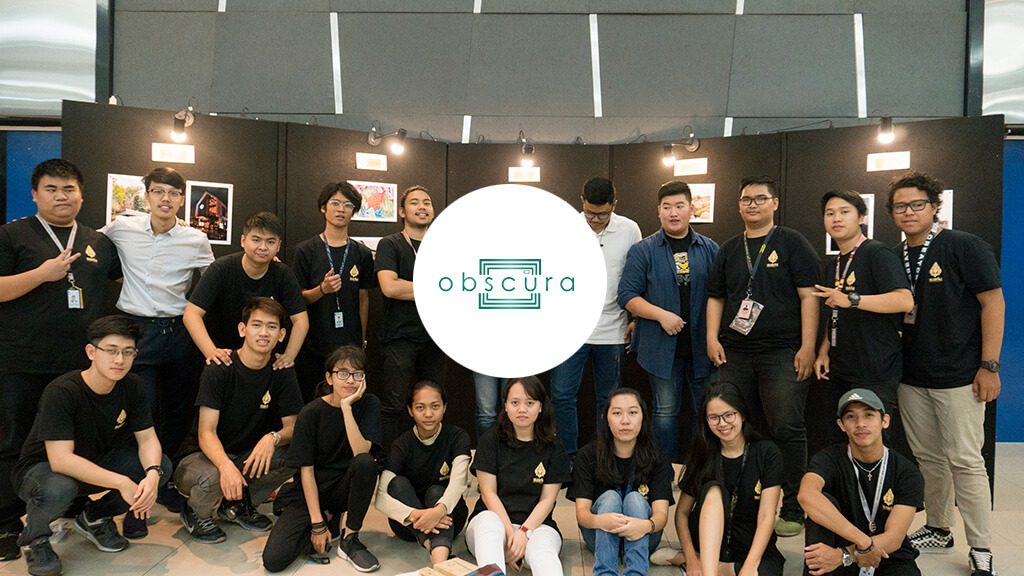
Obscura is a Student Activity Unit (UKM) engaged in photography under the auspices of Universitas […]

SEE OTHER
UMN’S STUDENT ACTIVITIES
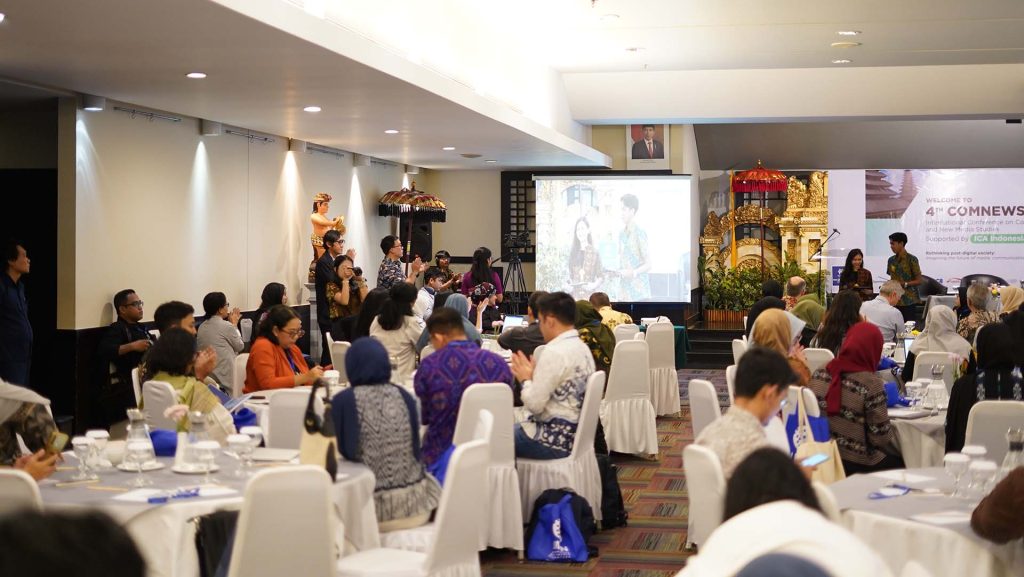
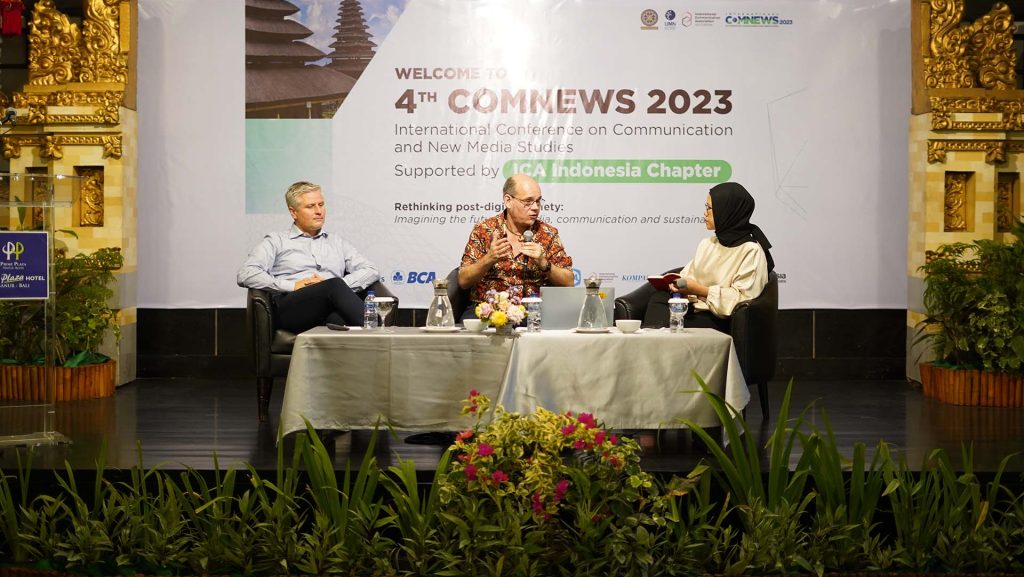
Conference on Communication and New Media Studies (COMNEWS 2025)
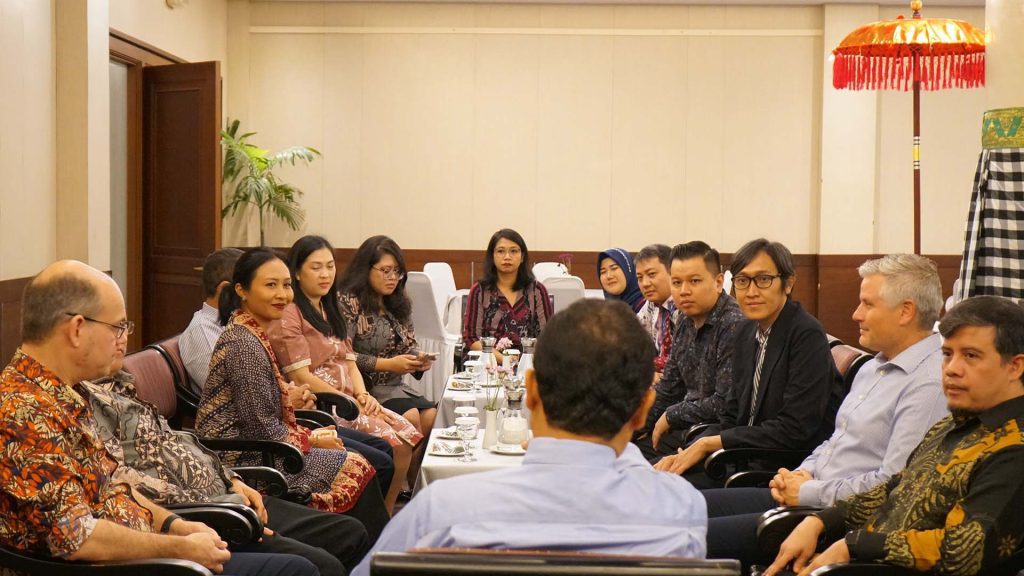
COMNEWS 2025 showcases innovative ideas and interdisciplinary collaboration to address today’s communication challenges, highlighting how AI, IoT, and advanced systems support sustainability through energy efficiency and green infrastructure.
%20Commnews%202023-1024x576.jpg "(Compressed) Commnews 2023")
Recapitulation of Internal Research – Journalism
Recapitulation of DIKTI Grant Research – Journalism
List of Lecturer Community Outreach Activities
Recapitulation of Copyright Innovation – Journalism
TESTIMONIAL

"Journalism at UMN gave me many opportunities to learn through hands-on projects. These experiences taught me to think critically, continuously grow, and have the courage to pursue new opportunities. These values have become an important foundation for me in building my career."
Felicia Salvina
Journalism 2021 | Journalist at Deutsche Welle Indonesia

"Journalism studies at UMN not only emphasize academic excellence, but also train students to collaborate effectively with others. In addition, character education is strongly emphasized to shape individuals who are wise, principled, and impactful."
Diana Valencia
Journalism 2015 | News Anchor at CNN Indonesia TV

“My experience studying at UMN was honestly fun and enjoyable. Having well-equipped laboratories provided great support for practical learning, making it easier for us to explore every subject and theory we were taught. In addition, during my time there, the Entrepreneurship course inspired me to start building my own business. The UMN environment itself was also great, as we were encouraged to think critically and uphold strong ethical values.”
Devin Yiulianto
Journalism 2014 | Direktur Utama (divinepro) & Managing Director (Monokrom EO) at ivinepro & Monokrom Event Organizer

“From UMN, I got a lot of useful knowledge in the world of work. Lecturers who are also practitioners always provide insight into the media industry so that students don't stutter when working. The curriculum provided is also in accordance with industry needs so that UMN graduates are ready to work in television stations, radio, print media, and online media.”
Jessica Damiana
Journalism 2014 | Junior Executive at Telum Media

"UMN provides a good environment and strong support from its lecturers, allowing me to have a great experience throughout my college years. There were also many activities, so campus life never felt monotonous. Overall, I am very happy with my experience studying at UMN. UMN is one of the reasons I have become the person I am today."
Ricky Halim
Journalism 2012 | E-commerce Lead Indonesia at Kohler Indonesia

Putri Suryani
Journalism 2010 | Owner Babee Yoru & Senior Business Partner Manulife

"UMN is a university that nurtures creativity, passion, and the drive to continuously innovate. As a Journalism student pursuing a field within the rapidly evolving media industry, UMN equipped me with strong cognitive capabilities and provided opportunities through campus activities that were relevant to the courses offered. One of these opportunities was Ultimagz, UMN’s student magazine, where I gained hands-on experience as a journalist, learned about media management, and made decisions that best served the editorial team. Through excellent academic instruction, supportive lecturers and staff, UMN also provided opportunities to develop leadership skills and access scholarships. During my time at UMN, I was fortunate to receive a scholarship from the Ancora Foundation. All of these experiences and opportunities have helped me remain adaptable in the ever-changing fields of media and research."
Gloria Fransisca Katharina Lawi
Journalism 2010 | Pursuing a Master of Science Communication at The Australian National University (ANU), 2026–2027, as an Australia Awards 2025 Scholar.

"Four years of studying Journalism at UMN helped me find my voice. Under the guidance of lecturers with extensive experience working across various mass media outlets, I was trained to work in the field, meet and interview people from diverse backgrounds, and produce journalistic work in various formats. My time at UMN provided me with a strong foundation that later enabled me to work across various national and international media outlets and produce meaningful work that, hopefully, can make a positive impact on the public."
Viriya Paramita Singgih
Journalism 2009 | Editor at Project Multatuli

Benediktus Krisna Yogatama
Journalism 2009 | Redaktur Utama at Suar.id
CERTIFICATION
Information Literacy
Information literacy is an ability that individuals have in determining, searching, managing and evaluating information effectively and efficiently. This training is open to UMN active students. For further information, please contact: library.umn.ac.id
Adobe Certification
Adobe is a fundamental software suite widely used in the film and animation industry. Recognizing this need, UMN provides Adobe certification programs, available either individually or as a complete package. For more information, please contact the Center for Enrichment and Development (CED).
“During my time in UMN’s Journalism Program, all the courses taught provided a great base for the future in media industry. In addition, I also feel that UMN educates its students to be able to adapt and communicate in various walks of life, which is certainly very useful for me to apply in my current world of work.”
David Caessarre
Alumni Jurnalistik 2015
Creative Officer di Narasi TV
Journalism
“Multimedia Nusantara University’s Journalism Study Program focuses on utilizing new technologies to learn new forms of journalism. Therefore, learning activities are also supported with adequate technology. Some courses are also tailored to the needs of the industry as well as the development of existing technologies, such as mobile and social media journalism courses that utilize the use of gadgets in producing and disseminating journalistic products through social media.”