Undergraduate Program in
Informatics
What is Informatics?
Informatics is a science that studies the basics and theories of computing. Through this study program, students will learn how to manage data and information that they can integrate into a system that can work automatically and is assisted by technology so as to create a tool that can simplify human life.
For example, with the development of today’s current technology, a car can run on its own without having to be driven by a driver, or the emergence of smart home technology that allows equipment and tools around the house to be controlled through a device very easily. These are some examples of the application of knowledge from informatics that you can find out in everyday life.
In the future, there are far more technologies that hasn’t been developed yet and in this study program you are able to make these changes.
Why should you choose
UMN Informatics?
The UMN Informatics study program focuses on student learning on artificial intelligence (Artificial Intelligence), Soft Engineering, and Cybersecurity. Students will be influenced and taught in-depth knowledge of the world of informatics from experts. Where the teaching staff are brought in from professionals who have expertise in that field. Besides this, the learning atmosphere is supported by various laboratory facilities that can be used by students to better focus and understand informatics as a whole. Through this, a balance is obtained between the learning of theory and practice.
FAQ
Why Choose the Informatics Study Program at UMN?
The rapid advancement of digital technology has transformed nearly every aspect of modern life, from business, healthcare, and education to the creative industries. This transformation has significantly increased the demand for digital talent who are not only capable of developing software but also possess critical thinking, problem-solving, and technology-driven innovation skills. To meet these demands, the Informatics Study Program at Universitas Multimedia Nusantara (UMN) offers an education designed to align with industry needs and future technological developments.
One of the key strengths of the Informatics Study Program at UMN is the implementation of Outcome-Based Education (OBE) and Project-Based Learning (PBL). Through the OBE approach, the learning process focuses on developing competencies required by the professional world, while PBL encourages students to learn through real-world projects that challenge their analytical thinking, creativity, and collaboration skills. With these approaches, students not only gain a solid theoretical foundation but also develop technology-based solutions that address real societal and industry challenges.
The Informatics curriculum at UMN is also developed in collaboration with various industry partners to ensure it remains aligned with technological advancements and labor market demands. Students study a wide range of computer science disciplines, including algorithms and data structures, software engineering, web and mobile application development, Artificial Intelligence (AI), data analytics, cybersecurity, cloud computing, and the Internet of Things (IoT). Collaboration with industry also provides valuable insights into current technologies, professional practices, and the competencies sought by employers.
Throughout their studies, students gain practical learning experiences that emphasize innovation and hands-on application. Application development projects, case studies, research, competitions, and interdisciplinary collaborations are integral parts of the learning process. These experiences enable students to build strong professional portfolios while developing teamwork, communication, and systematic problem-solving skills.
The learning process is supported by qualified lecturers consisting of academics, researchers, and industry practitioners with expertise in information technology. Students also benefit from various laboratory facilities that support software development, research, and digital technology exploration. The combination of experienced lecturers, modern learning facilities, and an industry-relevant curriculum creates an environment that encourages continuous innovation.
UMN’s commitment to maintaining educational quality is demonstrated through the ASIIN (Accreditation Agency for Degree Programmes in Engineering, Informatics, Natural Sciences and Mathematics) international accreditation. This accreditation confirms that the curriculum, learning process, study program governance, and graduate outcomes meet internationally recognized higher education standards. This recognition provides added value for both students and graduates as they pursue careers in the increasingly competitive technology industry.
Graduates of the Informatics Study Program at UMN have extensive career opportunities across various sectors, including technology companies, startups, financial institutions, healthcare, manufacturing, and multinational corporations undergoing digital transformation. Equipped with strong technical competencies, problem-solving skills, hands-on project experience, and a curriculum aligned with industry needs, Informatics graduates from UMN are well prepared to pursue careers as software engineers, system analysts, data engineers, AI engineers, cloud engineers, cybersecurity specialists, and other technology professionals in demand in the digital era.
Interested in becoming part of the next generation of technology innovators? Prospective students can apply through the UMN New Student Admission (PMB) website by selecting the appropriate admission pathway, completing the registration information, uploading the required documents, and completing all stages of the admission process through registration. Together with the Informatics Study Program at UMN, take the first step toward a career in the ever-evolving technology industry.
What Will You Learn in the Informatics Study Program at UMN?
The Informatics Study Program at Universitas Multimedia Nusantara (UMN) prepares students to become digital talents capable of designing, developing, and managing technology-based solutions. Through the implementation of Outcome-Based Education (OBE) and Project-Based Learning (PBL), students not only study computer science theories but also apply them in various projects that are relevant to industry needs.
The learning journey begins with mastering the fundamentals of computer science as the foundation for developing software and digital systems. Students take courses such as Programming Fundamentals, Algorithms & Data Structure, Discrete Mathematics, Linear Algebra, Operating System, Computer Architecture & Organization, Database Systems, and Computer Network. These courses develop the logical, analytical, and systematic thinking skills that are essential for professionals in the field of informatics.
After mastering these fundamentals, students explore a wide range of technologies that are widely used across industries. The curriculum includes Artificial Intelligence, Machine Learning, Deep Learning, Software Engineering, Computer Security, Cybersecurity, Mobile Application Programming, Game Development, and Advanced Web Programming. In addition, students can broaden their expertise through elective courses such as Blockchain Technologies, AI for Cybersecurity, Software Engineering with AI, Data Visualization, and Multimedia Concept, providing the flexibility to pursue interests aligned with the latest technological developments.
One of the key strengths of the Informatics Study Program at UMN is the implementation of Project-Based Learning (PBL) throughout the learning process. Students do more than complete individual assignments—they collaborate on various projects, ranging from designing applications and developing web- and mobile-based systems to creating artificial intelligence solutions and solving case studies that closely resemble real-world industry challenges. Through these experiences, students become accustomed to working in teams, managing projects, performing software testing, and presenting solutions to users or industry partners.
The Informatics curriculum at UMN is also developed in collaboration with various industry partners to ensure that course content remains aligned with technological advancements and labor market demands. In addition to classroom learning, students have opportunities to participate in seminars, guest lectures, workshops, and collaborative projects with technology professionals. This approach provides valuable insights into industry trends, software development processes, and emerging technologies, ensuring that graduates possess competencies that meet current industry expectations.
In addition to technical expertise, students also develop essential professional skills. Courses such as Public Speaking & Presentation Skills, Academic Writing, Technopreneurship, and Ethics in Informatics help students strengthen their communication, leadership, entrepreneurship, and responsible decision-making abilities. These competencies become valuable assets when working in multidisciplinary teams and interacting with clients and other stakeholders.
During the final years of the program, students can participate in various MBKM learning pathways, including industry internships, research, entrepreneurship, independent projects, and community service. These experiences allow students to apply their knowledge in professional environments while building strong portfolios before graduation.
UMN’s commitment to maintaining educational excellence is further demonstrated through its ASIIN (Accreditation Agency for Degree Programmes in Engineering, Informatics, Natural Sciences and Mathematics) international accreditation. Through the combination of a relevant curriculum, project-based learning, collaboration with industry, and international recognition, the Informatics Study Program at UMN prepares students to become graduates who are ready to adapt, innovate, and deliver technology-driven solutions to the challenges of the digital era.
What Is the Difference Between the Regular Program and the International Program in Informatics at UMN?
The Informatics Study Program at Universitas Multimedia Nusantara (UMN) offers two study pathways: the Regular Program and the International Program. Both are designed to produce graduates with competencies in computer science, software development, artificial intelligence, cybersecurity, and other digital technologies. The primary differences between the two programs lie in the language of instruction, learning experience, and level of exposure to international academic and industry environments, while the curriculum quality and learning outcomes are based on the same standards.
Both the Regular Program and the International Program implement Outcome-Based Education (OBE) and Project-Based Learning (PBL). This means that the learning process focuses not only on mastering theoretical knowledge but also on developing the competencies required by the professional world through various projects, case studies, and technology solution development. Students in both programs study core subjects such as algorithms and data structures, programming, software engineering, database systems, computer networks, Artificial Intelligence (AI), machine learning, cloud computing, cybersecurity, and web and mobile application development.
In the Regular Program, courses are primarily delivered in Indonesian, while students also use English-language references, scientific journals, and academic literature. This program is well suited for prospective students who seek a comprehensive Informatics education focused on technical competencies, project experience, and readiness to enter the technology industry in Indonesia and globally.
Meanwhile, the International Program provides a learning experience with a global perspective. Courses are delivered in English, enabling students to become accustomed to participating in discussions, preparing academic reports, presenting projects, and communicating in an international professional environment. This experience helps students improve their English proficiency while preparing them for careers in multinational companies, global startups, or advanced studies abroad.
In addition to English-medium instruction, students in the International Program have opportunities to broaden their perspectives through various international activities facilitated by UMN in collaboration with overseas universities and global partners. These opportunities may include academic collaborations, student exchange programs, guest lectures, and learning experiences with international academics. Such global exposure helps students understand technological advancements, workplace cultures, and the challenges of the digital industry in different countries.
Students in both the Regular Program and the International Program gain practical learning experiences through real-world projects that reflect industry needs. The Informatics curriculum at UMN is also developed in collaboration with various industry partners to ensure that course content remains aligned with technological advancements and workforce demands. Students are encouraged to build strong portfolios throughout their studies by developing applications, conducting research, participating in competitions, and completing collaborative projects that strengthen both their technical and professional competencies.
The entire learning process is supported by qualified lecturers consisting of academics, researchers, and industry practitioners with expertise in information technology. Students also benefit from modern laboratory facilities that support practical sessions, research, and innovation development. Furthermore, the quality of the Informatics Study Program at UMN has been recognized through its ASIIN (Accreditation Agency for Degree Programmes in Engineering, Informatics, Natural Sciences and Mathematics) international accreditation, demonstrating that its curriculum, learning process, governance, and graduate outcomes meet internationally recognized higher education standards.
The choice between the Regular Program and the International Program can be tailored to each prospective student’s academic goals and career aspirations. For those who wish to focus on developing strong technical competencies and hands-on project experience, the Regular Program is an excellent choice. Meanwhile, prospective students who aim to improve their English proficiency, gain international exposure, and build a global network from the beginning of their academic journey may find the International Program more suitable. Regardless of the program they choose, students receive the same high-quality education to become adaptive, innovative Informatics graduates who are ready to compete in the era of digital transformation.
Do You Need to Be Good at Math and Coding to Study Informatics at UMN?
Many prospective students assume that studying Informatics is only suitable for those who already excel in mathematics or have prior coding experience. In reality, that is not entirely true. The Informatics Study Program at Universitas Multimedia Nusantara (UMN) is designed to help students build fundamental knowledge step by step, allowing those with no programming background to develop their skills throughout the program.
During the early semesters, students learn the fundamentals of programming, algorithms, and computational thinking. The curriculum is structured to help students understand how to analyze and solve problems before writing code. As a result, logical thinking and a willingness to learn are often more important than having prior programming experience.
Mathematics is an important part of computer science, but students are not expected to be math experts before enrolling. Courses such as discrete mathematics, linear algebra, and statistics provide the foundation for understanding software development, data analytics, Artificial Intelligence (AI), and cybersecurity. Rather than focusing on complex calculations, these subjects emphasize analytical thinking, pattern recognition, and systematic problem-solving.
The same applies to coding. Students are not required to master programming languages before starting university. Throughout the program, they gradually learn various programming languages and technologies aligned with course objectives and industry needs. As they progress, students develop web and mobile applications, manage databases, and build technology-driven solutions for real-world challenges.
Beyond technical knowledge, students also develop essential professional skills, including critical thinking, teamwork, communication, project management, and effective presentation. These competencies are increasingly important, as technology development requires collaboration across multiple disciplines and professions.
The Informatics Study Program at UMN is supported by experienced lecturers and a curriculum that continuously evolves with technological advances and industry demands. Through hands-on projects, case studies, and technology development activities, students gain practical experience that bridges classroom learning with real-world applications. This supportive learning environment enables students to grow according to their interests and potential.
If you are passionate about technology, enjoy solving problems, are naturally curious, and are eager to keep learning, the Informatics Study Program at UMN is an excellent choice. Strong mathematics or coding skills are not prerequisites—they are competencies you will develop throughout your studies. What matters most is your willingness to learn, perseverance, and ability to adapt to the ever-evolving world of technology.
What Are the Career Prospects for Graduates of UMN’s Informatics Study Program?
Graduates of the Informatics Study Program at Universitas Multimedia Nusantara (UMN) enjoy strong career prospects as demand for digital talent continues to grow across industries. Digital transformation in technology, healthcare, finance, manufacturing, education, media, and government has created a growing need for professionals who can develop software, manage data, build digital systems, and drive technology-based innovation. As a result, Informatics graduates are sought after not only by technology companies but also by organizations accelerating their digital transformation.
Throughout the program, students develop industry-relevant competencies through a curriculum designed in collaboration with industry partners. They study subjects such as algorithms and data structures, software engineering, web and mobile application development, Artificial Intelligence (AI), machine learning, cybersecurity, cloud computing, the Internet of Things (IoT), and data analytics. This broad skill set enables graduates to adapt to the rapidly evolving technology landscape.
These competencies open the door to a wide range of career opportunities. Graduates of the Informatics Study Program at UMN can pursue careers as Software Engineers, Software Developers, Backend Engineers, Frontend Engineers, Full Stack Developers, Mobile Application Developers, Data Engineers, Data Analysts, Artificial Intelligence Engineers, Machine Learning Engineers, Cybersecurity Specialists, Cloud Engineers, System Analysts, Quality Assurance Engineers, DevOps Engineers, and IT Consultants. In addition to joining technology companies, graduates can work in startups, multinational corporations, banking, the creative industry, government institutions, or even establish their own technology startups.
Throughout their studies, students gain more than theoretical knowledge—they also develop practical experience by working on software projects that reflect real industry challenges. Through project-based assignments, research, competitions, and collaborations with industry partners, students strengthen their teamwork, problem-solving, product development, and professional portfolio before graduation. These experiences provide a competitive advantage when entering the workforce.
Students are guided by experienced lecturers who are academics, researchers, and industry practitioners with expertise in information technology. The curriculum is continuously refined in collaboration with industry partners to ensure it remains aligned with technological advancements and workforce demands. This industry-driven approach helps students stay current with emerging trends while preparing them for careers in the technology sector.
UMN’s commitment to academic excellence is demonstrated by the ASIIN (Accreditation Agency for Degree Programmes in Engineering, Informatics, Natural Sciences and Mathematics) international accreditation. This recognition confirms that the curriculum, teaching and learning processes, program governance, and graduate outcomes meet internationally recognized higher education standards. With strong technical expertise, hands-on project experience, and internationally recognized academic quality, graduates of the Informatics Study Program at UMN are well prepared to build successful careers as innovative, adaptable digital professionals capable of solving the challenges of the digital transformation era.
Accreditation Table
| Institution Accreditation |
National Accreditation |
International Accreditation |
 |
 |
 |
ECTS Points Table
| ECTS Points | 146 SKS |
| Education Type | Bachelor Program |
| Duration | 4 years |
| Language | Bahasa Indonesia |
| Bachelor's Degree | Bachelor of Computer (S.Kom.) |
Vision & Mission
Vision
To become a leading Undergraduate Informatics Study Program that produces internationally-minded graduates who are competent in the field of computer science, entrepreneurial spirit and noble character.
Mission
- Organizing learning with the best technology and curriculum and supported by professional teaching staff.
- Carry out research activities in the field of Informatics to advance information science and technology.
- Carrying out community service activities based on information science and technology in the context of practicing science and technology.
Specialization / Focusing / Concentration
The UMN Informatics study program has several specializations that students can choose to study more deeply, including:
- Database Administration
Through a specialization in Database Administration, students can learn more deeply about data-based administration processes through a management system supported by Oracle which provides guidance and learning activities.
- Game Design and Development
Through a specialization in Game Design and Development, students can learn more deeply about the process of building and designing a game in the form of a mobile platform.
- Cyber Security
Through the Cyber Security specialization, students can learn more deeply about the process
- Game Design and Development
- Cyber Security (EC-Council)
- Database Administration (Oracle)
- Applied Computer Networking (Cisco)
- System Applications Products (SAP)
- Artificial Intelligence (Ai)
Career Prospect
UMN Informatics Study program graduates can work in various IT fields. Some potential occupations that can be taken are as follows:
- Data Scientist
- Machine Learning Engineer
- Full-stack Developer
- Software Engineer
- Network Engineer
- Application Developer
- System Analyst
- Data Engineer
- UI/UX Designer
- Security Architect
- Penetration Tester/ Ethical Hacker
- Technopreneur (Start-up Founder)
Career Support
UMN Informatics Study Program graduates can continue their studies with S2 or a master’s degree in the fields of Computer systems, Computer Engineering, Software Engineering, Computer science, and Electronic Engineering
Learning Attainment
Preparing students to become graduates with noble characteristic, entrepreneurial spirit and international insight in the fields of Artificial Intelligence, Cybersecurity, Software Engineering and Game Development.
Curriculum
UMN Informatics students will learn about programming in various forms and also artificial intelligence during their studies at Informatics UMN. Essentially, the UMN Informatics curriculum can be explained as follows:
Year 1: students will learn about the basics of programming: an introduction to multimedia technology, algorithms and data structures. In the first year, students will also learn about the architecture and organization of computers and digital systems.
Year 2: in the second year, students will learn more about programming which includes declarative programming, object-oriented programming and web programming. Then students also learn about the foundation of systems: both operating systems and data-based systems. Alongside this, they will also be introduced to software engineering and software project management as well as knowledge of computer security and networks.
Year 3: students will learn about the interaction between humans and computers and programming of mobile applications through the knowledge of artificial intelligence in the third year. Then throughout same year, they will also learn about corporate business processes and also technopreneurship to prepare them to be ready to work in the world of business industry in the future.
Year 4: students will be prepared with the knowledge of cross-platform mobile programming and thematic system projects.
In this fourth year, students will be engaged in internships at large companies and startups and is the year for them to prepare for their graduation.
Entry Requirement
- High school graduate majoring in Science
- SMK graduates majoring in Computer Engineering, Information Engineering, Computer and Network Engineering.
Partnership & Collaborations
The UMN Informatics study program has collaborated with several parties both nationally and internationally. At the national level, this study program collaborates with GRID from Japan in the field of machine learning & depth learning research. Then, collaborating to support teaching and learning activities such as apprenticeship programs, holding workshop seminars, to scholarship programs with several companies such as ECE-COUNCIL, CSO, HUAWEI, SAP, RENOM INFRASTRUCTURE INDONESIA, BCA, TOKOPEDIA, BUKALAPAK, OURACLE, ANABATIK and etc.
Furthermore, in the international sphere, collaborating with GRID from Japan in conducting research related to Machine Learning and Depth Learning. Adjacent to this, UMN Informatics has been registered as part of APTIKOM (Association of Computer and Informatics Higher Education).
Why should you choose
UMN Informatics?
The UMN Informatics study program focuses on student learning on artificial intelligence (Artificial Intelligence), Soft Engineering, and Cyber security. Students will be influenced and taught in-depth knowledge of the world of informatics from experts. Where the teaching staff are brought in from professionals who have expertise in that field. Besides this, the learning atmosphere is supported by various laboratory facilities that can be used by students to better focus and understand informatics as a whole. Through this, a balance is obtained between the learning of theory and practice.
ECTS Points Table
| ECTS Points | 146 SKS |
| Education Type | Bachelor Program |
| Duration | 4 years |
| Language | Bahasa Indonesia |
| Bachelor's Degree | Bachelor of Computer (S.Kom.) |
Career Prospect
UMN Informatics Study program graduates can work in various IT fields. Some potential occupations that can be taken are as follows:
- Data Scientist
- Machine Learning Engineer
- Full-stack Developer
- Software Engineer
- Security Architect
- Penetration Tester/ Ethical Hacker
- Technopreneur (Start-up Founder)
Career Support
UMN Informatics Study Program graduates can continue their studies with S2 or a master’s degree in the fields of Computer systems, Computer Engineering, Software Engineering, Computer science, and Electronic Engineering
Student Scholarships
UMN scholarship program is offered to high school students in 12th grade who have academic, sports, and artistic achievements while in 11th grade. In addition, UMN also offers the program to high school/vocational school students who won medals in the National and International Science Olympics. As a form of appreciation for the dedication of teachers and employees/ staff in educating the nation's children, UMN provides scholarships in the form of a 50% reduction in fees for teachers/principals and a 30% reduction in fees for children of the employees/staff in high schools/vocational schools (both public and private) who want to continue their education at UMN.
Entry Requirement
- High school graduate majoring in Science
- SMK graduates majoring in Computer Engineering, Information Engineering, Computer and Network Engineering.
Students are required to attend academic guidance meetings at least 3 times per semester. The schedule of the meetings will be provided by the respective academic supervisors. Students have to bring the academic guidance book for the meeting and they need to make sure that the academic supervisor signs it
Continuing Education Department (CED) adalah program pengembangan pendidikan di Universitas Multimedia Nusantara (UMN) yang merupakan bagian dari Grup Kompas Gramedia. Kami memiliki berbagai program dalam kursus bahasa, pengembangan manusia, Pusat Pengujian untuk sertifikasi nasional dan internasional, dan program pelatihan. CED UMN dirancang untuk memenuhi kebutuhan siswa sekolah menengah dan perguruan tinggi, serta masyarakat dan profesional.
Students are encouraged to find their own companies / agencies for their internships that align with the focus of the Informatics Study Program i.e. Industrial Automation. Information about available internships can be obtained from other students, social media, job fairs, advertisements in print or electronic media or even through the UMN Career Development Center (CDC).
To complete the Undergraduate Program (S-1) at Multimedia Nusantara University, students must prepare, present, and defend the thesis in front of the thesis examination board, in accordance with the provisions of the study program. The preparation of the thesis is done individually and the students can choose the supervisor directly provided that the selected supervisor agrees.












To support the learning process, umn provided a complete and sophisticated college facility, according to industrial standards. Through the existence of the facility, students have been invited to be close to the industrial world since sitting in college and to have competence that matches the needs of the industry. That way, it will make it easier for umn students to find jobs, even before graduation.

A laboratory equipped with technological tools that can help students hold discussions and design concepts. […]

UMN is committed to advancing digital and online learning as an integral part of its […]

This modern theater hall has a capacity of up to 200 people. This room is […]

With the extent of modern interior designs, tens of thousands of local and international reading […]

Every UMN student holds an account to log in to the MYUMN application that provides […]

UMN’s Wi-Fi has a free flow system where UMN students are not charged with cellular […]
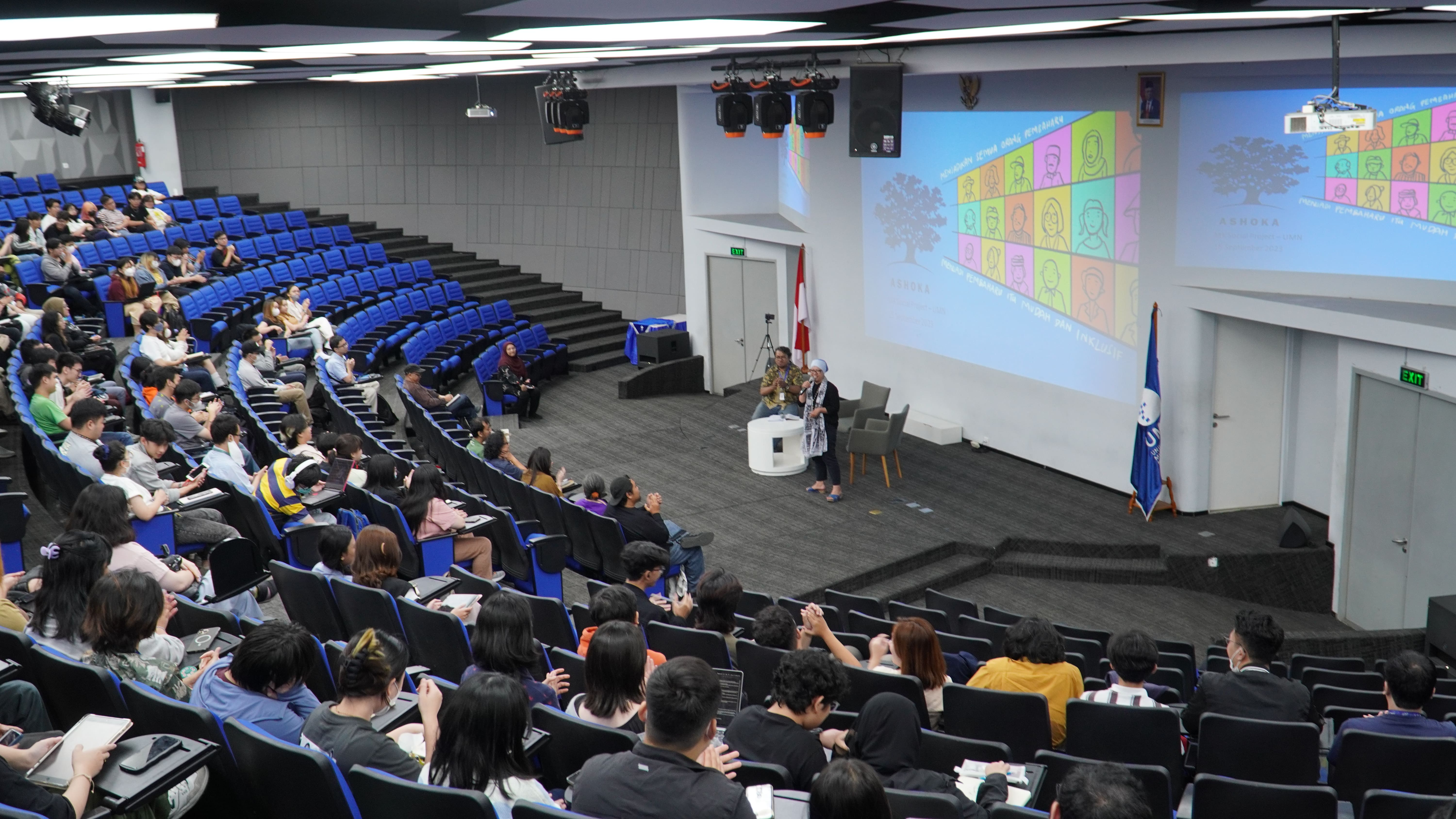
With a larger capacity compared to the other halls, the Lecture Theatre can accommodate up […]

UMN became the first campus established by Kompas Corner. Here, UMN students can access information […]


ANUTARA is a retail store located on the campus of Universitas Multimedia Nusantara that features […]
Extracurricular Student Activities
In order to help students explore and develop their non-academic potentials, UMN also provides a variety of extra-curricular activities for students which is locally called UKM, Student Activity Unit.
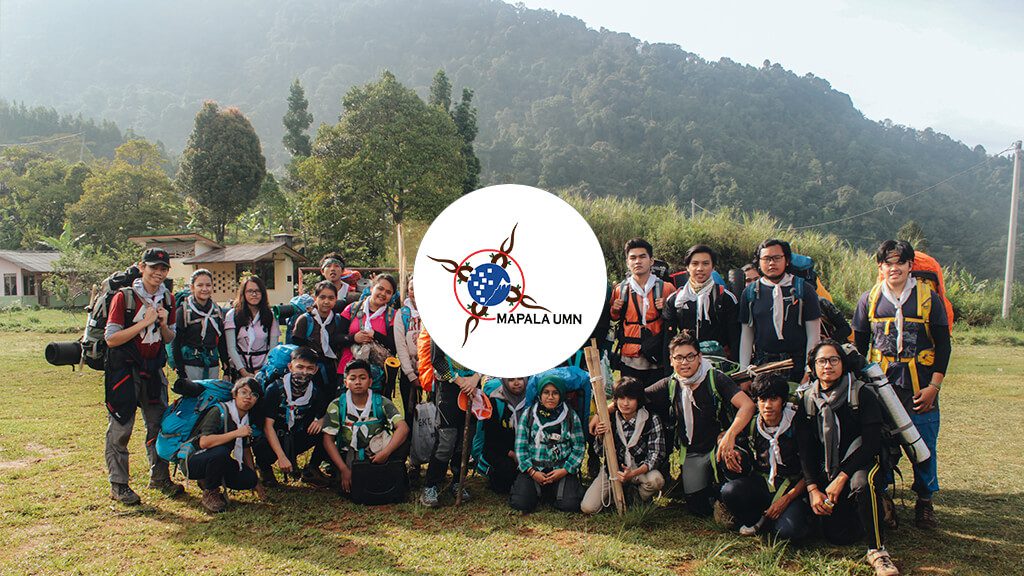
Student who are Nature Lovers in University Multimedia Nusantara can join and participate in UMN’s […]

Ultima Sonora is the Universitas Multimedia Nusantara Choir ensemble which has been established since 2007. […]

UMN Symphony Orchestra (USO), is one of the arts and culture UKM at UMN. As […]

Traditional Music and Dance or familiarly known as TRACCE is one of the Student Activity […]

Qorie is one of the many Student Activity Units at Universitas Multimedia Nusantara that has […]
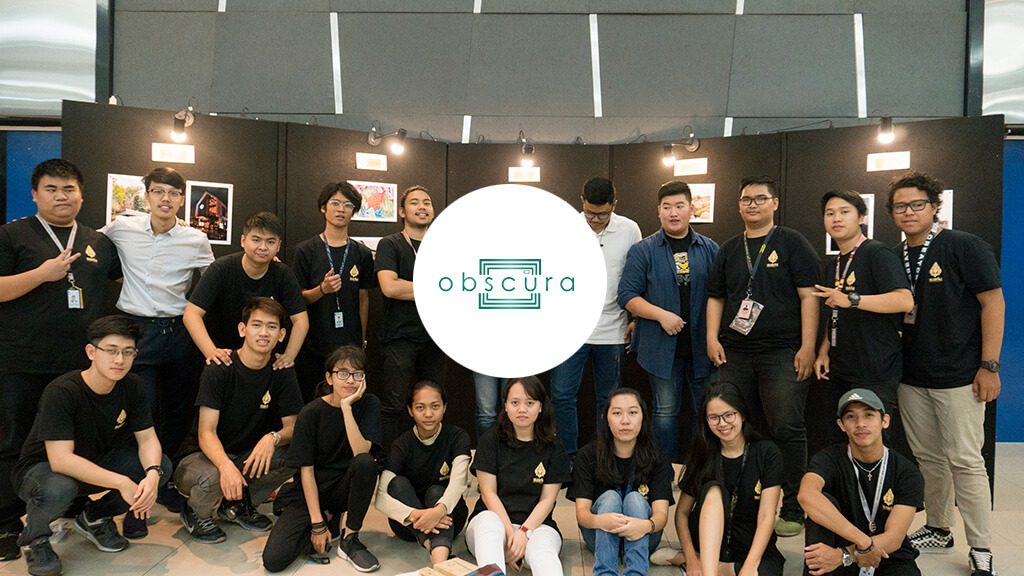
Obscura is a Student Activity Unit (UKM) engaged in photography under the auspices of Universitas […]

SEE OTHER
UMN’S STUDENT ACTIVITIES
Penelitian Hibah DIKTI - Informatika
Rekapitulasi Penelitian Internal - Informatika
Daftar Kegiatan PKM Dosen
Rekapitulasi Inovasi Hak Cipta - Informatika
Rekapitulasi Inovasi Merek - Informatika
Training & Certification
Universitas Multimedia Nusantara encourages Informatics students to upgrade their skills continuously through training and certification programs. Whether students are looking to advance their careers or deepen their technical proficiency, UMN’s comprehensive Informatics training and certification programs prepare them to succeed in the industry.
- IT Specialist: Artificial Intelligence
This certification focuses on developing artificial intelligence (AI) solutions, including governance, transparency, security, and ethics in AI. It is intended for individuals seeking to understand the AI development lifecycle, data processing, feature engineering, algorithm selection, model performance evaluation, and production pipeline management for continuous improvement.
- IT Specialist: Cybersecurity
This certification focuses on cybersecurity principles, frameworks, and investigative skills. It is suitable for individuals aiming to become entry-level security technicians or analysts, with deep understanding of system vulnerabilities, logs analysis for incidents, and tools utilization to monitor devices and networks.
- IT Specialist: Software Development
This certification focuses on core software development skills, including object-oriented programming, web applications, and databases. It is designed for individuals seeking to demonstrate proficiency in C#, SQL, HTML, CSS, JavaScript, and gain a deeper understanding of programming concepts, JSON, XML, and Algebra.
- Unity Certified User: Programmer
This certification assesses programming competency using Unity, a popular platform for developing games and interactive applications. It focuses on fundamental coding concepts, scripting in C#, and implementing features within the Unity environment. Ideal for those starting a career in game development or interactive media.
- Unity Certified User: VR Developer
This certification focuses on the ability to create VR programs using Unity, aligned with industry standards. It is intended for individuals seeking to demonstrate expertise in VR development and pursue a career in managing and creating VR programs. Familiarity with C#, VR software, and hardware is beneficial.
Information Literacy
Information literacy is an ability that individuals have in determining, searching, managing and evaluating information effectively and efficiently. This training is open to UMN active students. For further information, please contact: library.umn.ac.id
“I gained a lot of knowledge in terms of theory and practice while studying at UMN. Although many say the world of college and work is different, but the basic science that we use still comes from college and provides foundation for the future work. UMN provides the basic science very well. Also, UMN equips you with tools to think critically when analyzing a problem or needs of your customers.”
Marchelin Fau Hariono
Alumni Informatika 2012
IT Service Desk Analyst di Schlumberger
Informatics
Informatics is a science that studies the basics and theories of computing. Through this study program, students will learn how to manage data and information that they can integrate into a system that can work automatically and is assisted by technology so as to create a tool that can simplify human life.