Bachelor of
Communication Science
(BOCS)
What is Strategic Communication?
Strategic Communication is the study of various forms of communication related to the world of business, branding, and corporate affairs. The primary focus of this field is on how communication messages are designed and delivered effectively to support an organization’s strategic goals. This discipline is especially relevant in today’s digital era, where companies are expected to communicate intelligently and precisely with a wide range of stakeholders.
As a branch of communication studies, the Strategic Communication program goes beyond interpersonal communication and emphasizes a broader context. It explores how companies or brands engage with the public, build a positive image, and develop communication strategies that align with their identity and objectives.


Why Choose
UMN’s Strategic Communication?
The Communication Science Study Program at Universitas Multimedia Nusantara (UMN) operates under the Faculty of Communication and has been part of UMN’s organizational structure since 2007, based on a decree by the Multimedia Nusantara Foundation. UMN itself is part of Kompas Gramedia, one of the largest media groups in Indonesia, which has been established for over fifty years. This strong foundation provides the Communication Science Program with deep roots in the fields of media and communication, supported by an extensive network within the industry.
Since 2009, the program has been located at UMN’s Gading Serpong campus, after initially operating in Jakarta. Throughout its development, the program once offered two main concentrations: Journalism and Public Relations. However, in response to the rapid growth of journalism in the digital era, the Journalism concentration evolved into a separate study program in 2016. This expansion was driven by industry demands for graduates with specialized expertise in digital journalism.
Following this development, UMN’s Communication Science Study Program shifted its focus to the field of Strategic Communication. This focus encompasses expertise in both corporate communication and marketing communication, which is reflected in the program’s renewed vision. Through this approach, students are equipped with the knowledge and skills needed to design effective communication strategies, not only for individuals, but also for companies and brands.
FAQ
Why Choose the Strategic Communication Study Program at UMN?
The Strategic Communication Study Program at Universitas Multimedia Nusantara (UMN) is the right choice for prospective students who aspire to build careers in strategic communication, public relations, marketing, corporate communication, and the creative industry. This study program equips students with the knowledge, skills, and experience relevant to the needs of today’s professional world through an adaptive curriculum, practice-based learning, and mastery of communication strategies that keep pace with technological and industry developments.
The curriculum of the Strategic Communication Study Program at UMN is designed to develop students’ abilities to formulate, manage, and evaluate communication strategies for various organizations, companies, and institutions. Students study a wide range of subjects, including public relations, corporate communication, digital marketing communication, branding, reputation management, crisis communication, communication campaign planning, and communication research. In addition to understanding concepts and theories, students are trained to develop effective communication solutions based on the needs and challenges faced by organizations.
The Strategic Communication Study Program at UMN also emphasizes learning that is aligned with current issues in the field of communication. Students are introduced to digital transformation, the application of Artificial Intelligence (AI) in communication, data and audience behavior analysis, communication through digital media, sustainability communication, reputation management in the era of social media, and strategies for managing communication crises. As a result, students not only gain a strong understanding of communication theories but are also capable of designing strategies that are relevant to today’s dynamic industry.
The Strategic Communication Study Program at UMN implements experiential learning, enabling students to develop their competencies through various projects, case studies, simulations, and collaborations with industry partners. Students are encouraged to strengthen their strategic thinking skills, collaborate effectively in teams, develop communication campaigns, and present solutions tailored to organizational needs. This approach provides experiences that closely resemble professional practice, preparing graduates to enter the workforce with confidence.
To support the learning process, UMN provides various facilities that enhance academic activities and foster students’ creativity. In addition, students are guided by highly qualified lecturers consisting of both academics and industry practitioners with professional experience in communication, public relations, marketing, as well as extensive academic and industry networks at the international level. This combination of academic and professional expertise ensures that the learning materials remain aligned with the continuously evolving communication industry.
UMN’s commitment to maintaining educational quality is demonstrated through its achievement of two international accreditations: AUN-QA (ASEAN University Network – Quality Assurance) and ACQUIN (Accreditation, Certification and Quality Assurance Institute). These recognitions indicate that the curriculum, learning process, study program governance, and graduate outcomes meet higher education quality standards recognized at both regional and international levels. This provides graduates with added value, enabling them to compete in an increasingly competitive global job market.
With a relevant curriculum, practice-based learning, experienced lecturers, and recognition through the international accreditations of AUN-QA and ACQUIN, the Strategic Communication Study Program at UMN prepares students to become adaptive, creative communication professionals capable of delivering strategic solutions for a wide range of organizations. Interested in joining? Prospective students can apply through the UMN New Student Admission (PMB) website by selecting the appropriate admission pathway, completing the registration information, uploading the required documents, and completing all stages of the admission process through registration. Together with the Strategic Communication Study Program at UMN, take the first step toward a dynamic and opportunity-filled career in communication.
What Makes the Strategic Communication Study Program at UMN Different from General Communication Studies?
The Strategic Communication Study Program at Universitas Multimedia Nusantara (UMN) is part of the Communication Studies discipline that specifically focuses on the planning, management, and evaluation of communication strategies to help organizations achieve specific objectives. Compared to general Communication Studies programs, Strategic Communication at UMN provides a deeper focus on how communication is used strategically to build reputation, manage relationships with stakeholders, and support the success of an organization or brand.
In the Strategic Communication Study Program at UMN, students not only study communication theories but also learn how to develop communication strategies based on research, data analysis, and audience needs. Students gain an understanding of how organizations build their image, manage communication across various platforms, design communication campaigns, and evaluate the effectiveness of the strategies they implement.
The Strategic Communication curriculum at UMN is also designed to keep pace with the increasingly digitalized communication industry. Students study a wide range of subjects, including public relations, corporate communication, marketing communication, digital communication, branding, crisis management, integrated marketing communication, media analysis, and the use of data to support communication decision-making.
One of the key strengths of the Strategic Communication Study Program at UMN is its learning approach, which combines academic concepts with professional practice. Students have opportunities to participate in various projects, case studies, research activities, competitions, and internship programs that provide hands-on experience in addressing real-world industry challenges. These experiences help students build strong portfolios while gaining a deeper understanding of the continuously evolving communication landscape.
In addition to technical competencies, students also develop a wide range of industry-relevant skills, including critical thinking, communication, creativity, research, analytical thinking, leadership, and problem-solving abilities. These competencies equip graduates with the skills needed to design effective communication strategies across a variety of professional contexts.
The Strategic Communication Study Program at UMN has also received international recognition through ACQUIN (Accreditation, Certification and Quality Assurance Institute) accreditation from Germany. This accreditation demonstrates that the program’s curriculum, learning process, and quality assurance system meet international standards, providing added value for both students and graduates.
Graduates of the Strategic Communication Study Program at UMN have career opportunities in various fields, including Public Relations Specialist, Corporate Communication Officer, Marketing Communication Specialist, Brand Strategist, Digital Communication Specialist, Content Strategist, Media Relations Officer, Communication Consultant, and Corporate Affairs Specialist. With a relevant curriculum, practical learning experiences, and international recognition through ACQUIN accreditation, the Strategic Communication Study Program at UMN prepares students to become communication professionals capable of developing strategic communication plans, building relationships with diverse stakeholders, and delivering impactful communication solutions for organizations and society.
What Is the Difference Between the Strategic Communication Regular Program and International Program at UMN?
The Strategic Communication Study Program at Universitas Multimedia Nusantara (UMN) is offered through two study tracks: the Regular Program and the International Program. Both programs share the same curriculum, designed to produce graduates who are competent in the field of strategic communication, particularly in corporate communication and marketing communication. The primary differences lie in the language of instruction, learning experience, and opportunities for international academic and professional exposure.
The Regular Program is designed for students who wish to study strategic communication with an approach that is relevant to both national and global industry needs. Classes are primarily conducted in Bahasa Indonesia, while various references, scientific journals, and supporting materials are provided in English. Students study a wide range of subjects, including public relations, corporate communication, marketing communication, branding, integrated marketing communication, crisis communication, reputation management, digital communication, and data-driven communication strategies. In addition, students develop strategic thinking, communication research, and problem-solving skills, which are essential competencies for communication professionals.
Meanwhile, the International Program offers a learning experience with a global perspective. The learning process is conducted in English, allowing students to become accustomed to participating in discussions, presenting ideas, developing projects, and communicating within an international academic environment. This experience helps students strengthen their cross-cultural communication skills while preparing them for careers in multinational companies, international organizations, and global industries.
Students in the International Program also have opportunities to participate in various international activities facilitated by UMN in collaboration with partner universities abroad. These opportunities may include student exchange programs, short courses, international collaborative projects, guest lectures with global practitioners, and learning sessions led by visiting professors from different countries. Such experiences provide valuable insights into strategic communication practices across different countries while expanding students’ academic and professional networks.
Both the Regular Program and the International Program implement experiential learning that integrates theory and practice. Students work on various case studies, simulations, communication projects, and humanity projects that encourage them to design communication solutions for addressing a wide range of social issues. The curriculum also keeps pace with industry developments by covering current topics such as the application of Artificial Intelligence (AI) in communication, digital communication, audience behavior analysis, reputation management on social media, and sustainability communication.
All students are guided by qualified lecturers consisting of both academics and industry practitioners with professional experience in communication and extensive international networks. Through this combination of academic expertise and industry experience, students receive education that is highly relevant to professional needs while gaining an understanding of strategic communication developments at both national and global levels.
The quality of the Strategic Communication Study Program at UMN has also been recognized through two international accreditations: AUN-QA (ASEAN University Network – Quality Assurance) and ACQUIN (Accreditation, Certification and Quality Assurance Institute). These recognitions demonstrate that the curriculum, learning process, study program governance, and graduate outcomes meet higher education standards recognized at both regional and international levels. Therefore, students in both the Regular Program and the International Program receive the same quality of education, with the primary distinction being the learning experience and the level of international exposure throughout their studies.
Choosing between the Regular Program and the International Program depends on each prospective student’s academic goals and career aspirations. For those who wish to gain a learning experience focused on the national industry while maintaining a global perspective, the Regular Program is an excellent choice. Meanwhile, prospective students who aim to enhance their English proficiency, broaden their international experience, and build a global network from the beginning of their university journey may find the International Program to be the more suitable option.
What Will You Learn in the Strategic Communication Study Program at UMN?
The Strategic Communication Study Program at Universitas Multimedia Nusantara (UMN) equips students with the knowledge, skills, and experience needed to design effective communication strategies across various industry sectors. The curriculum is designed to combine communication theory, strategic thinking, creativity, and practical experience to prepare students for the ever-evolving world of communication.
During the early stages of the program, students learn the fundamental principles of communication that serve as the foundation for understanding the relationships among organizations, the media, and society. Courses include communication theory, organizational communication, consumer behavior, communication research, communication ethics, and research methodology. This foundation helps students understand how communication can be used to build relationships, influence public perception, and create value for organizations.
As they progress through the program, students explore various areas of strategic communication, including public relations, corporate communication, branding, digital marketing communication, integrated marketing communication, reputation management, crisis communication, media management, communication campaign planning, and digital communication strategies. Students also learn how to design communication programs based on research findings, analyze audience needs, determine appropriate strategies, and evaluate the effectiveness of communication campaigns.
The curriculum of the Strategic Communication Study Program at UMN also keeps pace with emerging issues in the communication field. Students gain an understanding of the application of Artificial Intelligence (AI) in communication, data analysis for decision-making, communication strategies through digital media, reputation management in the social media era, sustainability communication, cross-cultural communication, and communication challenges arising from rapid technological advancements. As a result, graduates not only understand communication theories but are also able to develop communication solutions that are relevant to the needs of organizations and society.
The Strategic Communication Study Program at UMN adopts an experiential learning approach through case studies, simulations, communication projects, and collaborations with various industry partners. Students also participate in humanity projects, which encourage them to apply communication strategies to address social issues and create meaningful impacts for society. Through these experiences, students not only develop professional competencies but also strengthen their social awareness, collaboration skills, and creative problem-solving abilities.
To enrich the learning experience, the Strategic Communication Study Program at UMN regularly organizes guest lectures featuring practitioners from various industries, including corporations, communication agencies, media organizations, and professional institutions. Students also have opportunities to learn from visiting professors from partner universities around the world. The involvement of industry professionals and international academics provides valuable insights into global communication trends, industry developments, and best practices applicable to the professional world.
Students are also supported by qualified lecturers consisting of both academics and industry practitioners with extensive professional experience in communication and international networks. The learning process is further supported by various facilities that foster creativity and collaboration, enabling students to build their professional portfolios throughout their studies.
UMN’s commitment to maintaining educational quality is demonstrated through its achievement of international accreditations from AUN-QA (ASEAN University Network – Quality Assurance) and ACQUIN (Accreditation, Certification and Quality Assurance Institute). These accreditations indicate that the program’s curriculum, learning process, study program governance, and graduate outcomes meet higher education standards recognized at both regional and international levels.
Through a combination of theory, practice, industry collaboration, international exposure, and learning that keeps pace with developments in the field of communication, the Strategic Communication Study Program at UMN prepares students to become adaptive and creative communication professionals who are capable of delivering strategic solutions for a wide range of organizations in the digital era.
What Are the Career Prospects for Graduates of the Strategic Communication Study Program at UMN?
Graduates of the Strategic Communication Study Program at Universitas Multimedia Nusantara (UMN) have broad career opportunities across various industry sectors. In the digital era, nearly every organization requires professionals who are capable of designing communication strategies, building organizational reputation, managing relationships with diverse stakeholders, and delivering effective messages to the public. Through an adaptive curriculum that aligns with industry needs, the Strategic Communication Study Program at UMN prepares students to become graduates who are ready to meet the challenges of the professional world at both the national and international levels.
Throughout their studies, students develop competencies in strategic communication, including public relations, corporate communication, marketing communication, branding, integrated marketing communication, crisis communication, reputation management, and digital communication. Students also study communication research, audience behavior analysis, communication campaign planning, media management, as well as the application of Artificial Intelligence (AI) and digital technologies to support effective communication decision-making.
These competencies open up career opportunities across a wide range of professions. Graduates of the Strategic Communication Study Program at UMN may pursue careers as Public Relations Officers, Corporate Communication Specialists, Marketing Communication Specialists, Brand Strategists, Digital Communication Specialists, Corporate Affairs Officers, Media Relations Officers, Social Media Strategists, Content Strategists, Communication Consultants, Event and Campaign Managers, and Community Relations Officers. In addition, graduates have opportunities to work in communication agencies, multinational corporations, startups, media organizations, government institutions, non-profit organizations, or establish their own businesses in the communication and creative industries.
To prepare students for the professional world, the Strategic Communication Study Program at UMN implements an experiential learning approach. Students participate in various case studies, simulations, communication projects, humanity projects, and collaborations with industry partners, providing them with hands-on experience in addressing real-world communication challenges. The learning process is further enriched through guest lectures delivered by practitioners from various industries and visiting professors from international partner universities, enabling students to gain insights into global developments in strategic communication.
Students are also guided by qualified lecturers consisting of both academics and industry practitioners with professional experience in communication and extensive international networks. This combination ensures that the learning materials remain aligned with industry developments while providing perspectives that are relevant to today’s professional landscape. In addition, students are encouraged to build strong portfolios through a variety of communication projects that serve as valuable assets when entering the workforce.
The success of graduates from the Strategic Communication Study Program at UMN is also reflected in the achievements of its alumni, who have built careers in national and multinational companies, communication and advertising agencies, media organizations, technology startups, government institutions, and international organizations. Alumni contribute as public relations practitioners, corporate communication specialists, communication consultants, marketing professionals, brand managers, and communication team leaders across various industries. The program’s extensive alumni network also serves as one of its strengths in supporting graduates’ career development.
UMN’s commitment to maintaining educational quality is demonstrated through its achievement of two international accreditations: AUN-QA (ASEAN University Network – Quality Assurance) and ACQUIN (Accreditation, Certification and Quality Assurance Institute). These accreditations indicate that the curriculum, learning process, study program governance, and graduate outcomes meet higher education standards recognized at both the regional and international levels.
Through a curriculum that is relevant to industry needs, practice-based learning, collaboration with the professional world, and internationally recognized quality through AUN-QA and ACQUIN accreditation, the Strategic Communication Study Program at UMN prepares graduates who are adaptive, creative, and ready to become communication professionals capable of delivering strategic solutions for organizations in the digital era.
National Accreditation
General Information
| Credits | 241.92 (ECTS) / 144 (SKS) |
| Education Type | Bachelor Program |
| Duration | 4 years |
| Language | Indonesia & English |
| Bachelor's Degree | Bachelor of Communication Science (S.I.Kom.) |
| Type of Program | Full-time |
Vision & Mission
Vision
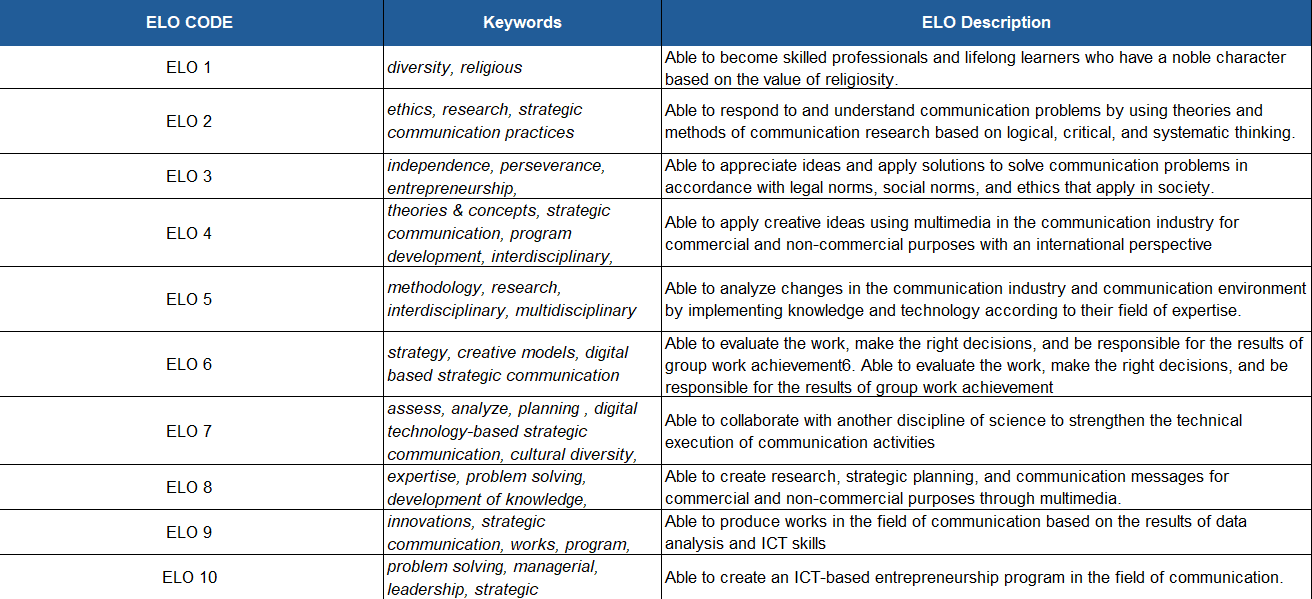
To become a leading undergraduate Communication Science study program that produces graduates with a global outlook, competent in the fields of corporate communication and marketing communication, grounded in logic, ethics, and information and communication technology (ICT). The program emphasizes both theoretical mastery and practical skills, fosters an entrepreneurial spirit, and cultivates graduates with strong moral character.
Mission
- To provide high-quality learning experiences, supported by professional lecturers and a curriculum that is up-to-date and aligned with industry needs (link and match).
- To conduct research programs that contribute to the development of communication science, with a strong foundation in information and communication technology (ICT).
- To carry out community service activities related to communication, in order to contribute to fulfilling the needs of both society and the industry.
Career Prospect
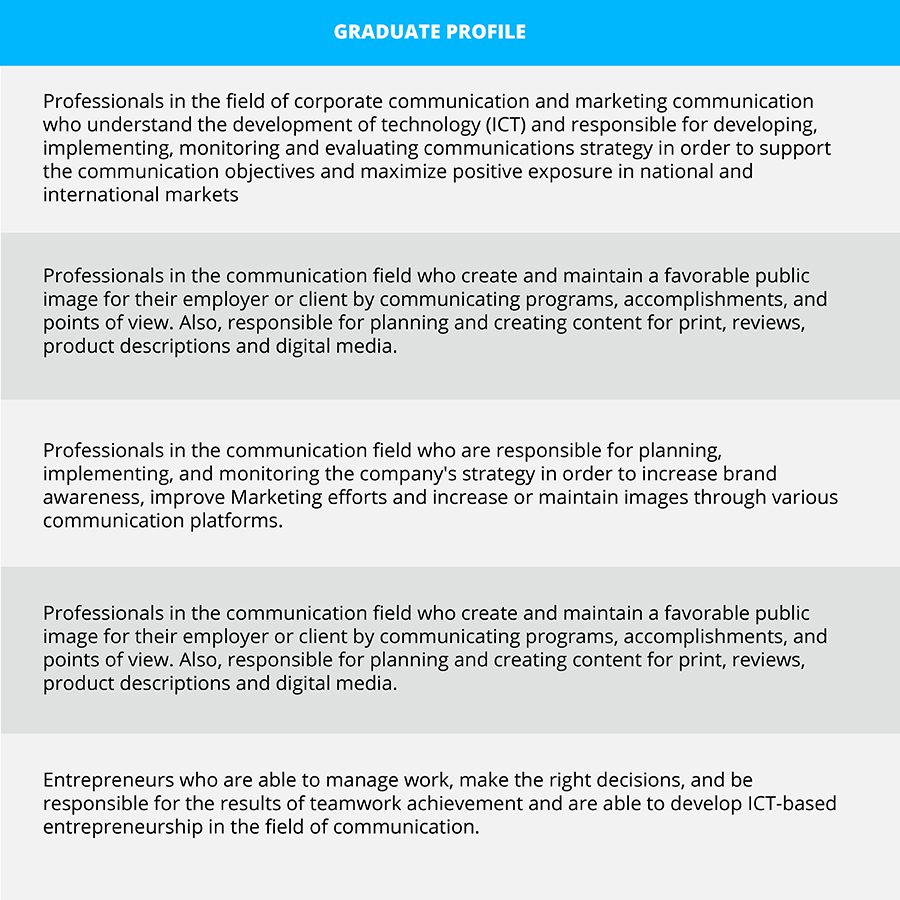
Graduates in Communication Science Study Program can pursue careers in the fields of communication as follows:
Public Relations Executive, Public Relations Manager, Public Relations Consultant, Brand Manager, Corporate Communication officer, Public Speaker, Negotiator, Digital Marketer, Social Media Specialist, Media Relations officer, Researcher in Communication Science, Account Executive, Media Planner, Strategic Planner, Copywriter, Digital Content Writer, Creative Advertising, Event Planner, Marketing Communication officer, Community Relations officer, Entrepreneurs, etc.
Further Study
Graduates of UMN’s Strategic Communication Study Program can pursue further studies in Communication, Public Relations, or other fields within the Social Sciences.
Partnership & Collaborations
The Strategic Communication Study Program has established strong partnerships with leading global and local companies, prominent NGOs, international organizations including the United Nations, and various government institutions.
Our partners include:
Kompas Gramedia – the largest media company in Southeast Asia
PT. Kompas Cyber Media (Kompas.com)
The Jakarta Post – PT. Bina Media Tenggara (Jakarta Post Connect)
Indonesia Indicator
PT. Arkadia Digital Media Tbk (Suara.com)
PT. Media Lintas Inti Nusantara (KBR – Kantor Berita Radio)
Redcomm Indonesia (PT. Persuaseni Merah Kreasindo)
Briefer (PT. Kreasi Komunikasi Digital)
Innocean Worldwide Indonesia
Badan Perlindungan Konsumen Nasional (BPKN)
Persatuan Perusahaan Periklanan Indonesia (P3I)
Persatuan Hubungan Masyarakat Indonesia (PERHUMAS)
Lembaga Sertifikasi Profesi Public Relations Indonesia (LSPPRI)
Specialization in Communication Science Program
BoCS Study Program is uniquely distinguished by its integration of corporate communication and marketing communication into the context of global sustainability issues (Sustainable Development Goals (SDGs). The program emphasizes the importance of digital communication, preparing graduates to leverage emerging technologies, data science, and AI to drive impactful, purpose-driven campaigns that address both organizational objectives and societal challenges.
The Communication Science program focuses its specialization on strategic communication, equipping students with expertise in Corporate Communication and Marketing Communication.
Student Scholarship
UMN scholarship program is offered to high school students in 12th grade who have academic, sports, and artistic achievements while in 11th grade. In addition, UMN also offers the program to high school/vocational school students who won medals in the National and International Science Olympics. As a form of appreciation for the dedication of teachers and employees/ staff in educating the nation's children, UMN provides scholarships in the form of a 50% reduction in fees for teachers/principals and a 30% reduction in fees for children of the employees/staff in high schools/vocational schools (both public and private) who want to continue their education at UMN.
Entry Requirement
- High school graduate majoring in Science, Social Sciences or Languages
- Vocational school graduates of various majors.
Students are required to attend academic guidance meetings at least 3 times per semester. The schedule of the meetings will be provided by the respective academic supervisors. Students have to bring the academic guidance book for the meeting and they need to make sure that the academic supervisor signs it.
Continuing Education Department (CED) is an educational development program at Universitas Multimedia Nusantara (UMN) which is part of the Kompas Gramedia Group. We have various programs in language courses, human development, Testing Centers for national and international certifications, and training programs. UMN’s CED is designed to meet the needs of high school and college students, as well as the public and professionals.
Students are encouraged to find their own companies / agencies for their internships that align with the focus of the Strategic Communication Study Program. Information about available internships can be obtained from other students, social media, job fairs, advertisements in print or electronic media or even through the UMN Career Development Center (CDC).
To complete the Undergraduate Program (S-1) at Multimedia Nusantara University, students must prepare, present, and defend the thesis in front of the thesis examination board, in accordance with the provisions of the study program. The preparation of the thesis is done individually and the students can choose the supervisor directly provided that the selected supervisor agrees.
| Semester | Type | COURSE PLAN | |
| CODE | COURSE | ||
| 1 | Compulsory | UM122 | English 1 |
| Compulsory | UM152 | Agama | |
| Compulsory | UM162 | Pancasila | |
| Compulsory | MSC1000 | Introduction to Communication Foundations | |
| Compulsory | MSC1101 | Critical & Creative Thinking | |
| Compulsory | MSC1003 | Communication and Personal Relationships | |
| Compulsory | MSC1102 | Introduction to Strategic Communication | |
| Compulsory | MSC1103 | Business Principles & Communication | |
| 2 | Compulsory | UM223 | English 2 |
| Compulsory | UM163 | Civic | |
| Compulsory | MSC2104 | Design Thinking | |
| Compulsory | MSC2105 | Strategic Communication for Organizations | |
| Compulsory | MSC2106 | Bahasa Indonesia for Communication | |
| Compulsory | MSC2107 | Introduction to Marketing Communications | |
| Compulsory | MSC2108 | Introduction to Corporate Communications | |
| Compulsory | MSC2002 | Communication Ethics | |
| 3 | Compulsory | MSC3001 | Interdisciplinary Communication Foundations |
| Compulsory | MSC3401 | Public Speaking and Presentation Skills | |
| Compulsory | MSC3004 | Intercultural Communication & Conflict Resolution | |
| Compulsory | MSC3007 | Media & Sociology | |
| Elective | MSC3006 | Global Communication & Popular Culture | |
| Elective | MSC3504 | Integrated Brand Campaign | |
| Elective | MSC3201 | Digital Graphic Communication | |
| 4 | Compulsory | MSC3008 | Quantitative Communication Research Methods |
| Compulsory | MSC3005 | Effective Persuasive Communication | |
| Elective | MSC3404 | Corporate Branding & Reputation Management | |
| Elective | MSC3402 | Media Relations & Public Effectiveness | |
| Elective | MSC3500 | Media Planning & The Consumer Journey | |
| Elective | MSC3300 | Digital Strategic Communication & Data Analytics | |
| Elective | MSC3407 | Investor & Government Relations | |
| Elective | MSC3502 | Transmedia & Brand Storytelling | |
| 5 | Compulsory | MSC4009 | Qualitative Communication Research Methods |
| Elective | MSC3403 | Issue Management & Crisis Communication | |
| Elective | MSC3409 | Communication for Sustainable Development | |
| Elective | MSC3507 | Sales Promotion Communication | |
| Elective | MSC3202 | Art, Copywriting & Creative Strategy | |
| Elective | MSC3200 | Visual & Photographic Communication | |
| Elective | MSC3503 | Special Event & Brand Activation | |
| 6 | MBKM Track 1 | ||
| Compulsory | MSC5600 | Professional Business Ethics | |
| Compulsory | MSC5601 | Industry Experience | |
| Compulsory | MSC5602 | Industry Model Validation | |
| Compulsory | MSC5603 | Evaluation and Reporting | |
| 7 | REGULAR | ||
| Compulsory | MSC7010 | Research Proposal Seminar in Communication Science * | |
| Compulsory | MSC7204 | Seminar for Project Based Thesis | |
| Compulsory | MSC3406 | Community Relations & Engagement | |
| Compulsory | MSC3301 | Social Media & Mobile Marketing Strategy | |
| Compulsory | MSC3302 | Growth Hacking for Startup Business | |
| 8 | Compulsory | MSC8011 | Thesis |
| MSC8205 | Project Based Thesis | ||
| 7 | (7th Semester) MBKM Social Impact Initiative | ||
| Compulsory | MSC7625 | Capstone Project Social Impact | |
| Compulsory | MSC7626 | Problem Identification and Solving | |
| Compulsory | MSC7628 | Project validation | |
| Compulsory | MSC7629 | Monitoring & Evaluation | |
|
Location of the study program or HEI site(s)/location where the program is provided |
Tangerang, Indonesia |
|
Faculty/Department |
Faculty of Communication Science |
|
Academic Degree |
Bachelor of Communication Science |
| Date or planned date of introduction |
28.11.2005 (Decree Number 169/D/O/2005) 2007/2008 Academic Year (First Cohort) |
|
Status last national accreditation (incl. result) Status last int. accreditation (incl. result) |
|
|
Subject field |
Marketing Communication, Corporate Communication |
|
Regular study duration |
8 semesters / 4 years |
|
Number of (ECTS) credits |
241,92 ECTS |
|
Enrollment period(s) |
Odd semester |
|
Frequency of the offered program |
Annually |
|
Capacity per year |
560 students |
|
Number of students currently enrolled |
2.102 students |
|
Average number of graduates per year |
416 |
|
Target group(s) |
National and International Senior High School graduates interested in communication field |
|
Admission requirements |
|
|
Status of International Accreditation |
First Accreditation |












To support the learning process, umn provided a complete and sophisticated college facility, according to industrial standards. Through the existence of the facility, students have been invited to be close to the industrial world since sitting in college and to have competence that matches the needs of the industry. That way, it will make it easier for umn students to find jobs, even before graduation.

Communication Science Undergraduate Program (CSUP) prepares students by integrating ICTs in the teaching-learning process such […]

UMN is committed to creating an inclusive and supportive learning environment for all students. The […]
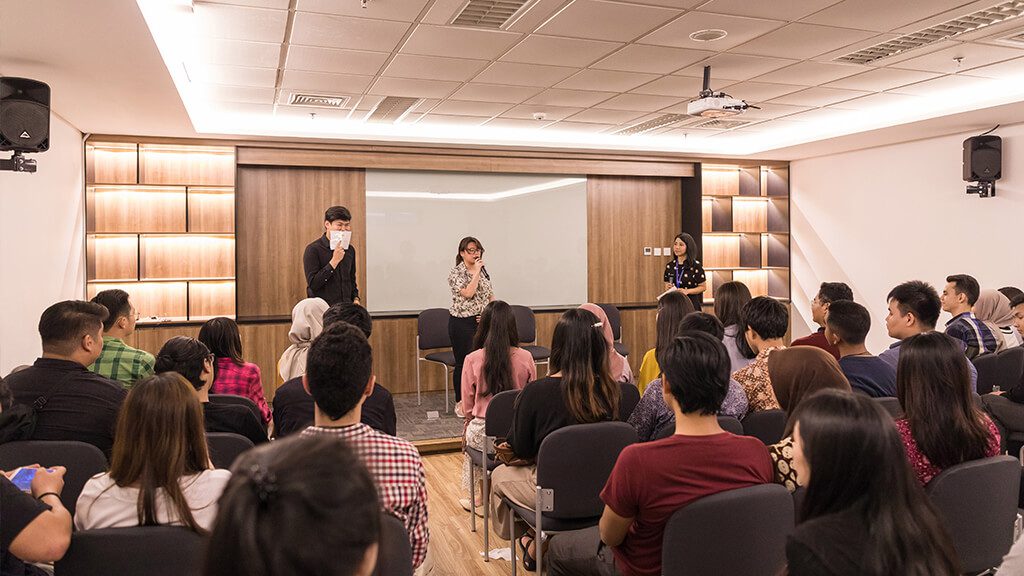
Collabo Space is a room provides space for students to perform various practical acts in […]

This collaborative space is used to explore the understanding of individuals or groups through the […]

This studio is specifically designed according to the operational standards of television broadcasting so that […]

A laboratory equipped with technological tools that can help students hold discussions and design concepts. […]

Narra Space is a multifunctional room that blends natural and modern elements. It features a […]
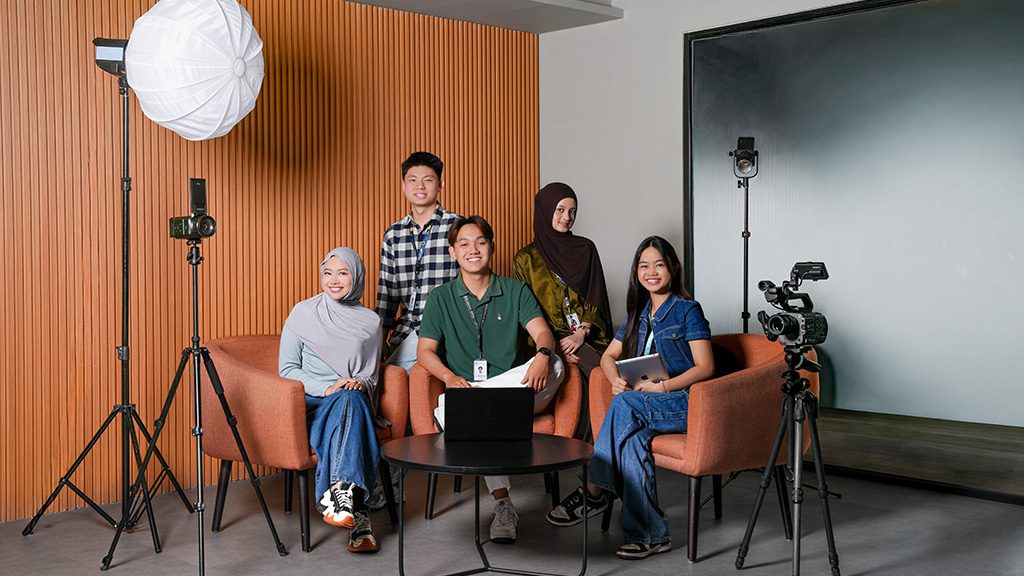
Content Hub is a revitalized version of the former newsroom, designed to provide a spacious […]

UMN RADIO 107.7 FM is a broadcast that is streamable on radio.umn.ac.id. This is a […]
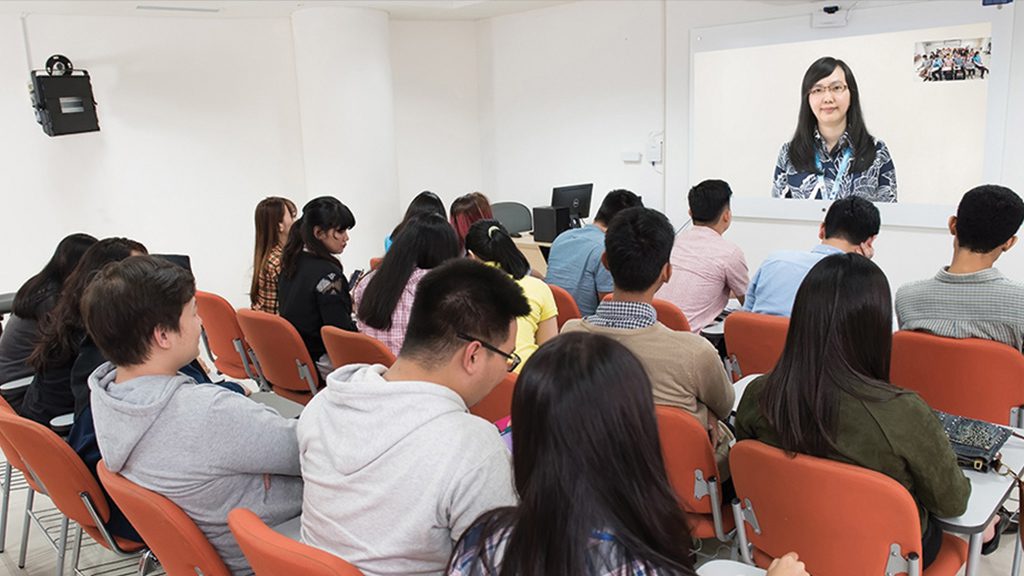
UMN is committed to advancing digital and online learning as an integral part of its […]
Extracurricular Student Activities
In order to help students explore and develop their non-academic potentials, UMN also provides a variety of extra-curricular activities for students which is locally called UKM, Student Activity Unit.
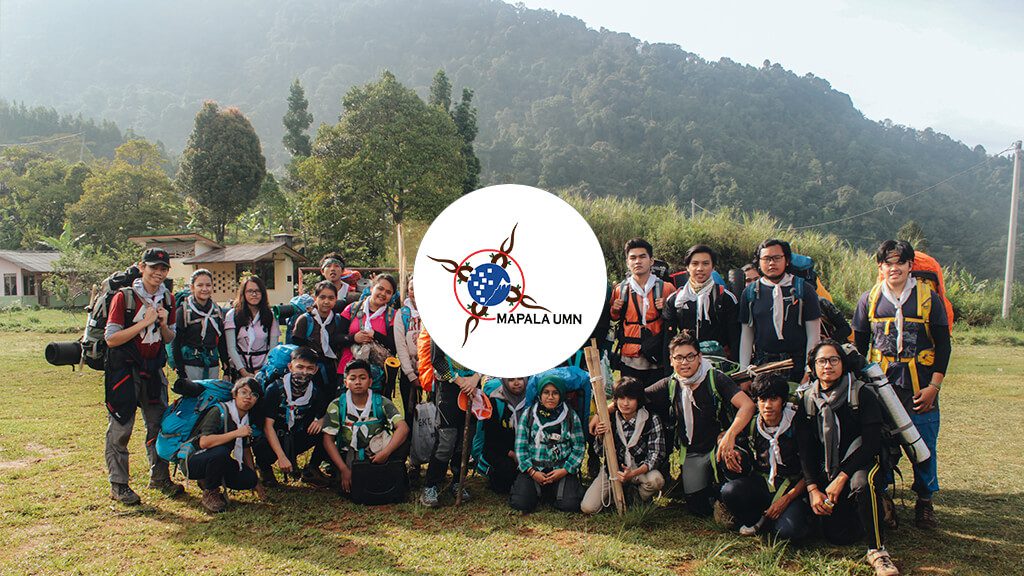
Student who are Nature Lovers in University Multimedia Nusantara can join and participate in UMN’s […]
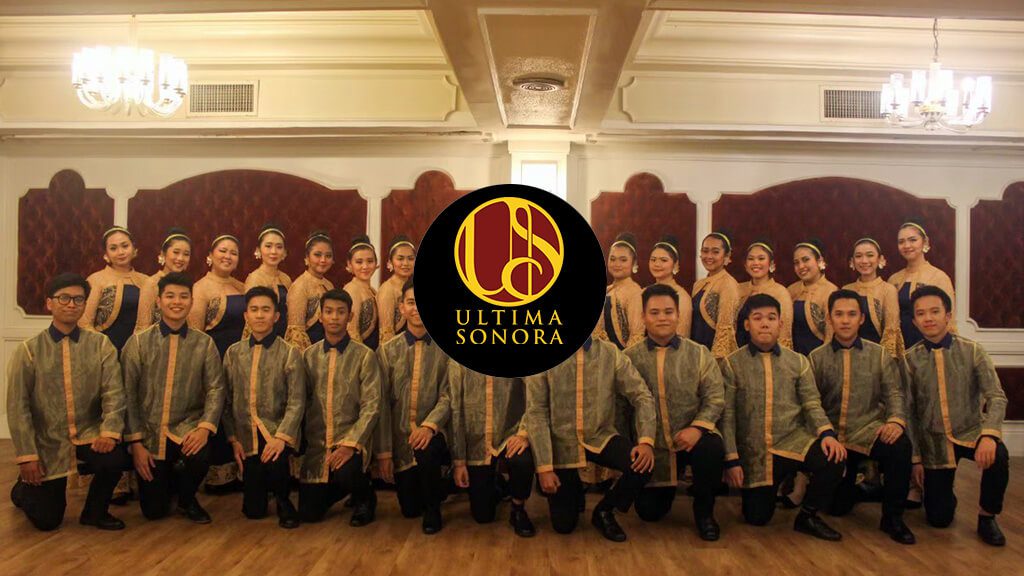
Ultima Sonora is the Universitas Multimedia Nusantara Choir ensemble which has been established since 2007. […]
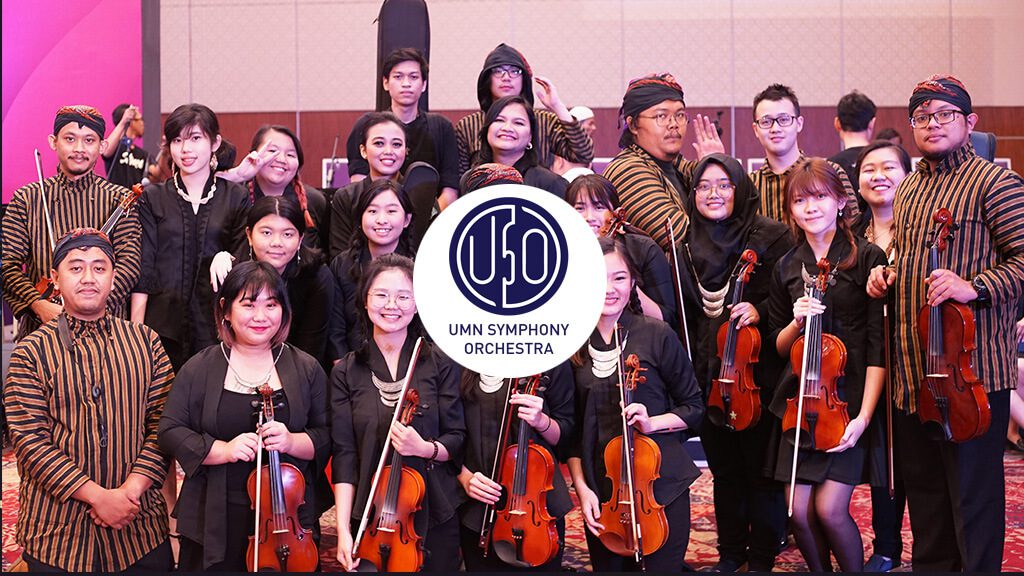
UMN Symphony Orchestra (USO), is one of the arts and culture UKM at UMN. As […]
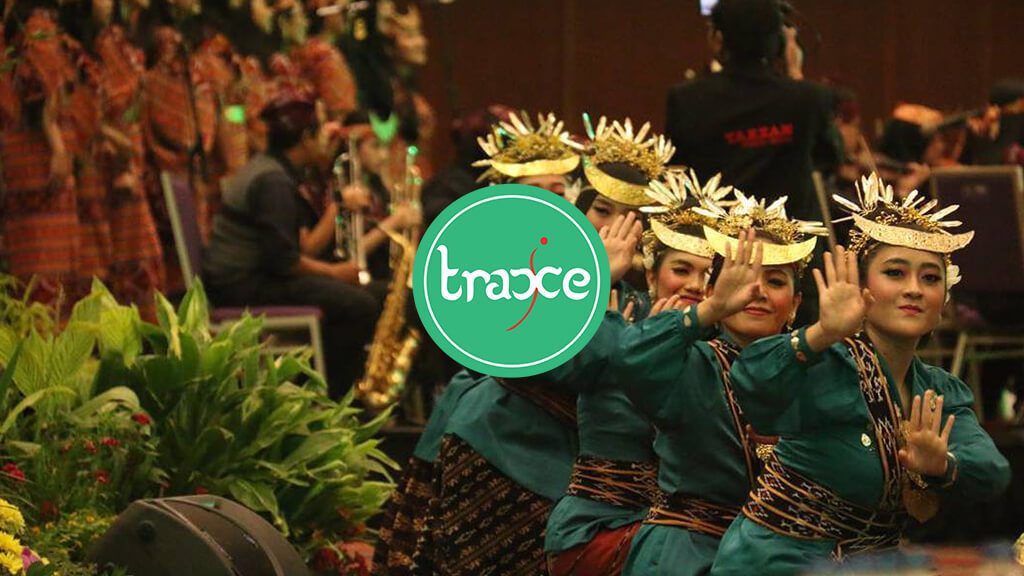
Traditional Music and Dance or familiarly known as TRACCE is one of the Student Activity […]
Qorie is one of the many Student Activity Units at Universitas Multimedia Nusantara that has […]
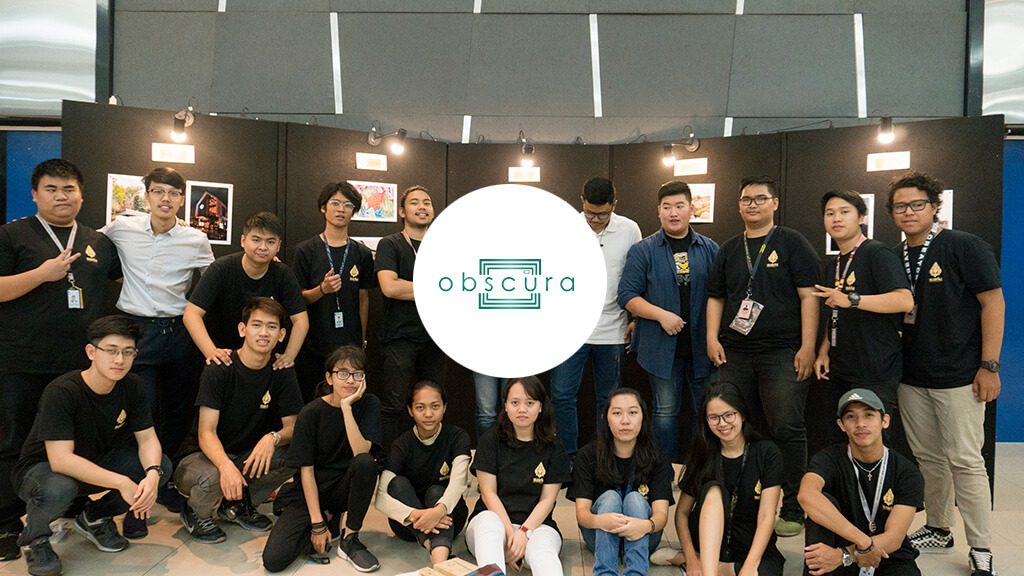
Obscura is a Student Activity Unit (UKM) engaged in photography under the auspices of Universitas […]

SEE OTHER
UMN’S STUDENT ACTIVITIES
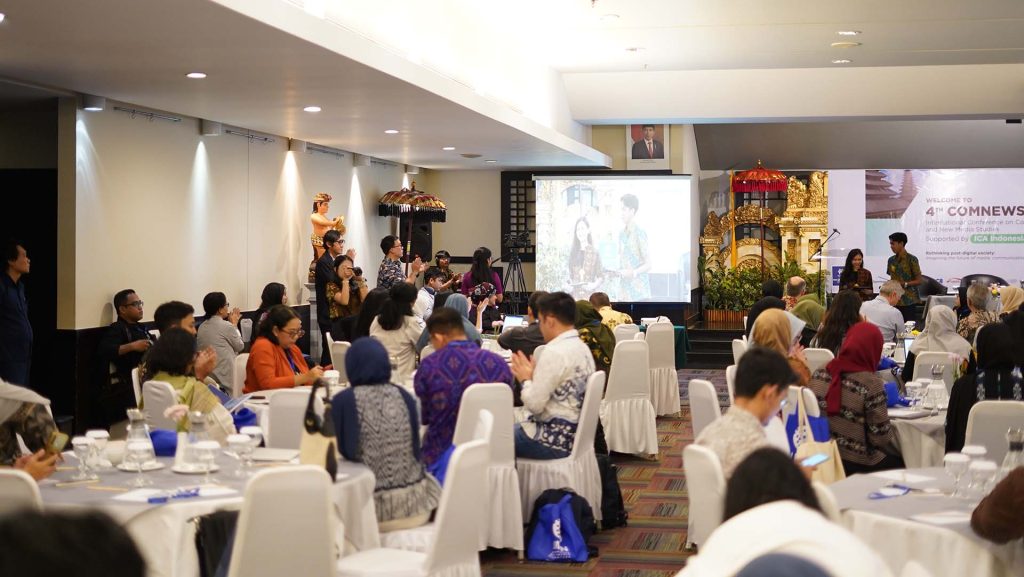
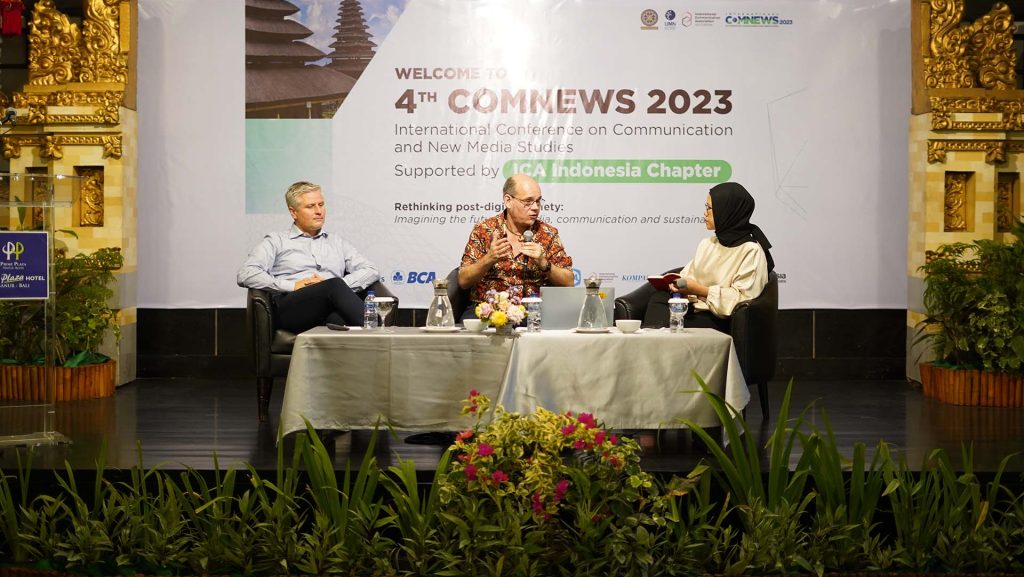
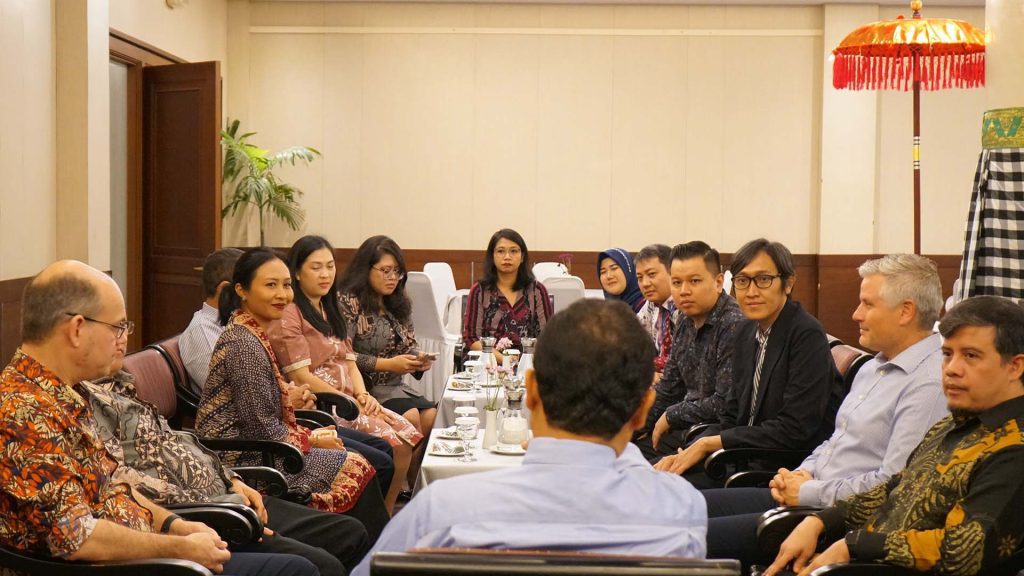
Conference on Communication and New Media Studies (COMNEWS 2025)
COMNEWS 2025 showcases innovative ideas and interdisciplinary collaboration to address today’s communication challenges, highlighting how AI, IoT, and advanced systems support sustainability through energy efficiency and green infrastructure.
%20Commnews%202023-1024x576.jpg "(Compressed) Commnews 2023")
Recapitulation of DIKTI Grant Research – Communication Science
List of Lecturer Community Outreach Activities
Recapitulation of Copyright Innovations – Communication Science
TESTIMONIAL

"UMN is a highly modern and tech-friendly university. I gained a lot of knowledge and skills that have helped me thrive in the social media era, not only through the courses I took but also through various campus events and organizations. I also built a strong network, as UMN is home to many creative and talented individuals. This environment not only helped me become more creative but also allowed me to build connections that continue to benefit me in the professional world to this day. In my opinion, having a great university is one thing, but having a strong network is another. UMN has both."
Evelyn Saraswati Hutani
Strategic Communication 2016 | Content Creator

“An enjoyable and enriching experience. I gained not only knowledge, but also valuable experiences, connections, and ways of thinking that have shaped who I am today.”
Adi Surya Chuardy
Strategic Communication 2013 | Corporate Communication Lead at Hana Bank

"Studying at UMN pushed me beyond limits I never knew I could reach. The university truly honed my critical and creative thinking while equipping me with the essential skills to thrive in the workforce. I feel deeply privileged to have been guided by remarkably supportive and experienced lecturers who guided me through my studies. I genuinely enjoyed the experience studied at UMN."
Aniq Tasia
Strategic Communication 2012 | Marketing Manager at SOME BY MI (Korean Skincare Brand)

"A balanced combination of soft and hard skills, industry practitioners as lecturers who present real-world case studies, and organizational experience during college at UMN all serve as a strong foundation for entering the professional world."
Ananda Wondo
Strategic Communication 2010 | Digital Marketing Manager at Four Seasons Hotel Jakarta

"Being part of the Kompas Gramedia Group and supported by experienced lecturers in their respective fields, UMN provides an ideal environment for deepening knowledge in communication, particularly Public Relations. In addition to academic competencies and soft skills, UMN also offers numerous opportunities for students to develop their hard skills through various activities and practical experiences. This combination equips every graduate with the knowledge, skills, professionalism, and strong work ethic needed to enter the professional world."
Ananda Wondo
Strategic Communication 2010 | Marketing Communications Manager at Blibli

“Studying in the Communication Science Study Program at UMN provided me with many valuable experiences that have become an important foundation throughout my career journey. In addition to learning the fundamentals of communication theory, I also learned how to think strategically, work collaboratively in teams, and overcome challenges through various projects during my studies.
After graduating, I began my career in the broadcasting industry with Fremantle Indonesia, then continued my journey at RCTI, and am now working at IDN as an Event Strategy Manager. My experience at UMN helped me adapt to different industries and provided a strong foundation for developing event strategies, building collaborations with various stakeholders, and delivering creative and relevant solutions. I am grateful to have been part of UMN, which has opened many opportunities for me to continue growing.”
Adinda Dwi Larasati
Strategic Communication 2010 | Event Strategy Manager - IDN Event

"Back when I was part of the early cohorts, it felt like we were building and learning together. UMN’s lecturers were very progressive, with a good balance between academics and industry practitioners, providing students with a more holistic understanding. UMN also opened up many opportunities for students to implement their ideas through social activities, student organizations, and various other initiatives. The Kompas Gramedia Group network also has a strong reputation in the industry, which gives UMN graduates a positive impression among employers."
Quincy Meilisa Wongso
Strategic Communication 2009 | Senior Advocacy & Influence Manager at PT L'Oreal Indonesia
CERTIFICATION
Information Literacy
Information literacy is an ability that individuals have in determining, searching, managing and evaluating information effectively and efficiently. This training is open to UMN active students. For further information, please contact: library.umn.ac.id
“I can finish college with responsibilities while doing business. Mostly, Communication Science Program teaches a lot about branding and marketing, how we create a brand that people can easily remember and share with others.”
Wilson Tjandra (Strategic Communication Alumni)
Founder and CEO Burgushi.id (Motrela Group)
Strategic Communication
Strategic Communication is the study of all forms of communication related to business, branding, and corporate activities. As a branch of communication science, the Strategic Communication study program goes beyond interpersonal communication between individuals and focuses on how companies or brands communicate with their audiences.