
Explore Various Collaboration Opportunities between UMN and Lac Hong University, Vietnam
February 19, 2026
UMN Architecture Study Program Welcomes Muhammadiyah University Kendari to UMN
February 19, 2026
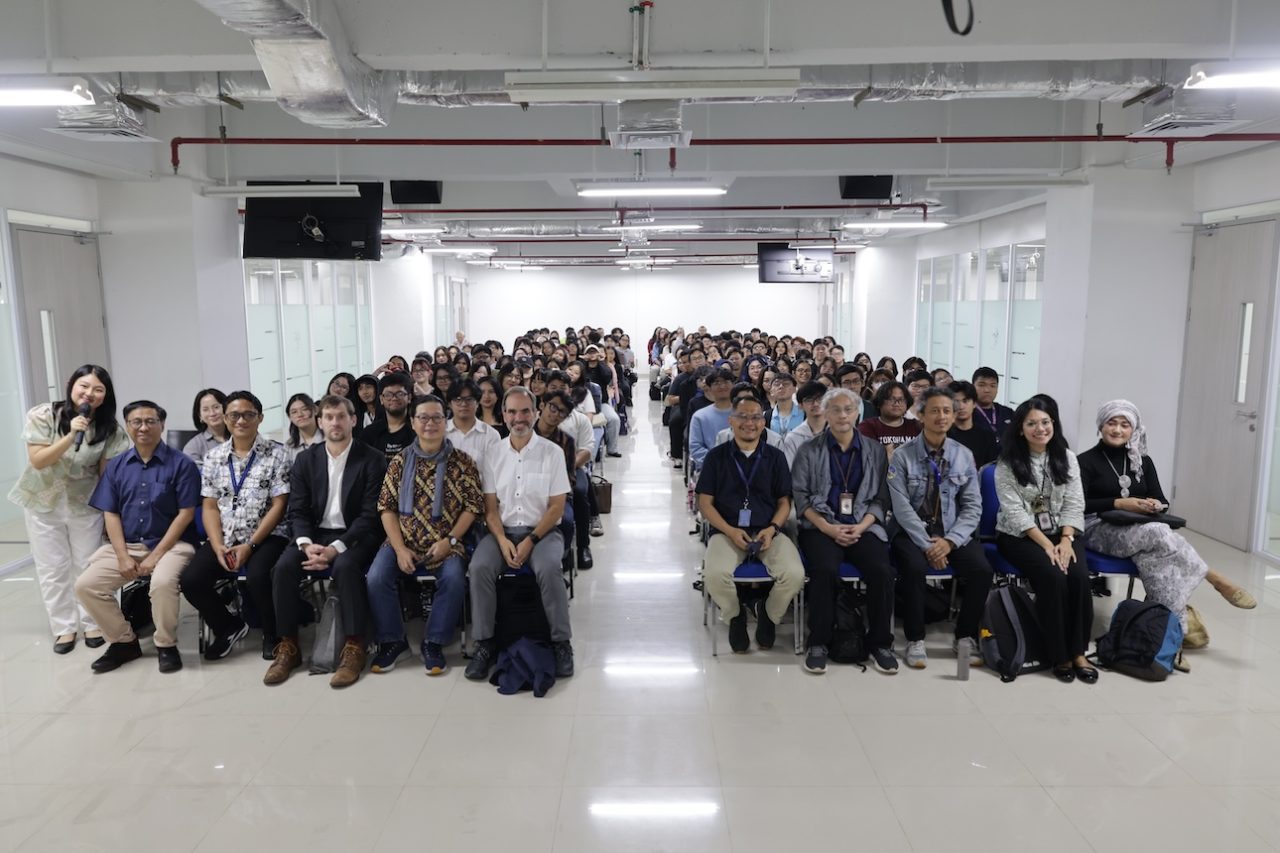
Group photo of digital journalism lecturers and students with The New York Times. (Doc. UMN)
Tangerang, (05/02/2026) – The UMN Digital Journalism study program held a guest lecture with The New York Times. The guest lecture, titled “The Future of The News and Media Industries,” was presented by Michael Greenspon, Global Head of Licensing & Print Innovation at The New York Times, and moderated by Dr. Ignatius Haryanto Djoewanto, S.Sos., M.Hum., Head of the Master of Communication Studies Program.
As technology continues to evolve, the media industry is undergoing various changes. In this guest lecture with The New York Times, students gained insights into how the media business landscape is evolving, from business strategies and technology utilization to the challenges of maintaining credibility in the digital age.
“The transformation of media today is quite different from the past. Currently, we rely on subscriptions to online media or The New York Times’ official website. I think this makes it easier for the general public to access, but even so, we still produce paper newspapers,” Michael explained.
He explained that The New York Times is currently expanding its media coverage to better serve young people. He emphasized the importance of continuing to monitor public interest both in America and abroad.
“This is in line with how The New York Times follows developments in social media. I think this is both a challenge and a strategic tool to introduce products from The New York Times. This condition is our reference for not only creating credible news, but also the right framing,” he said.
Regarding social media, Michael believes that the algorithms used online are quite dangerous for the public sphere. This is because there is a lot of inaccurate information that can lead the public to believe something that is not necessarily true or is disinformation.
“In addition to algorithms, the phenomenon of ‘clickbait’ is also a widespread problem. Many people write captivating clickbait that is inappropriate in order to get high click and reader numbers. However, when you look at the title and content, they are not consistent, and this problem is a difficulty that we must face,” he added.
Looking back, The New York Times itself has initiated an international campaign called “Truth,” which is in line with The New York Times’ vision to continue providing credible and accurate news to the wider community. This campaign is also part of their commitment to openness, both in terms of truth and differences of opinion in society.
Media Industry Challenges: From Technology to Censorship
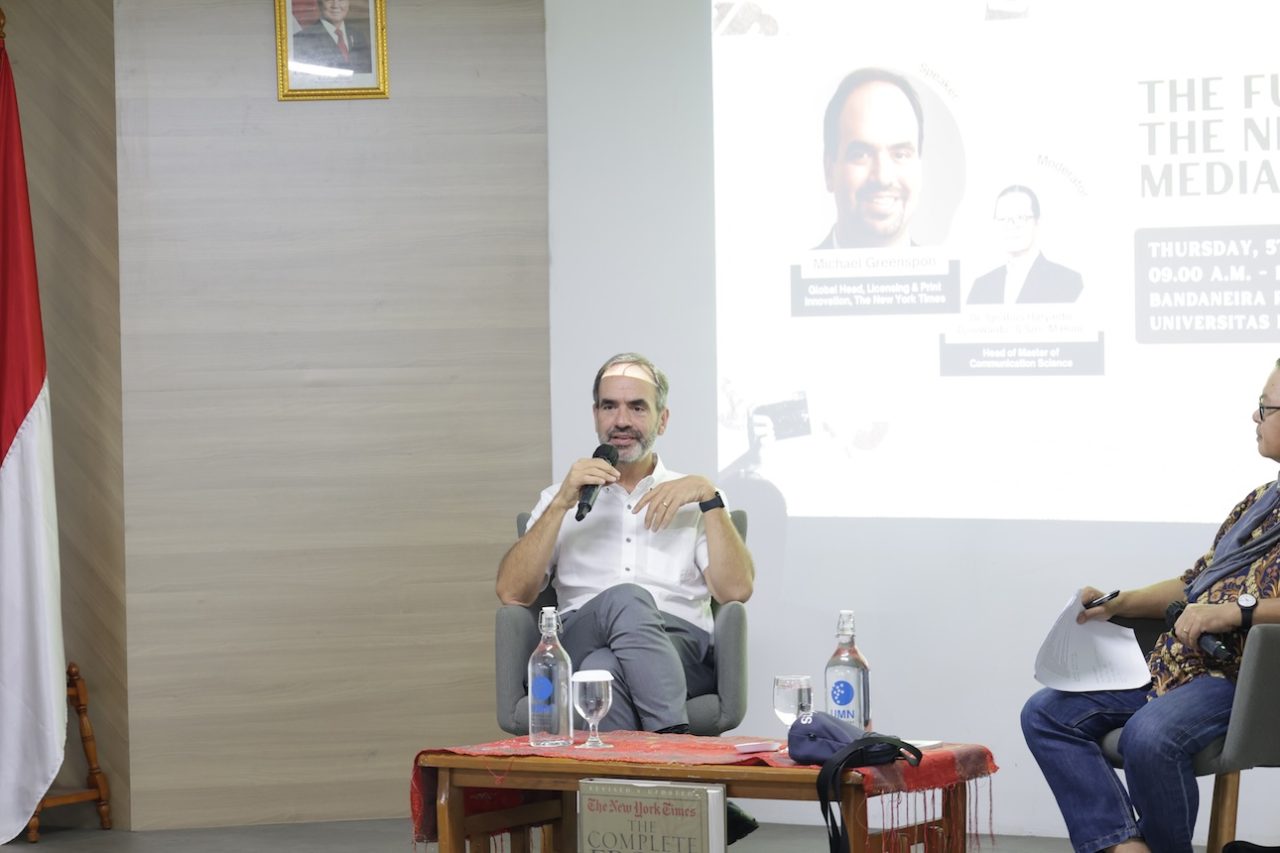
Presentation by Michael. (Doc. UMN)
In addition to social media, Michael explained that Artificial Intelligence (AI) technology is one of the biggest challenges and threats to The New York Times’ business model. People no longer use search engines that direct them to platforms; they use AI to search for information.
“Technological developments are something we cannot avoid, so we ourselves are collaborating with an AI company to protect our intellectual property, as well as establishing various other collaborations such as training, transcribing articles into audio, and summarizing articles in The New York Times,” Michael said.
The New York Times’ direct use of AI ranges from producing audio articles to translating articles into other languages to researching and summarizing articles. In the future, he revealed that there will be other innovations that utilize AI to make it easier for customers to get the latest information.
“Apart from the challenges of AI technology, of course we face various public challenges. As a media industry, we are definitely faced with various pros and cons from the public. Various public parties have criticized The New York Times journalists, but this does not stop us from continuing to discuss the truth,” Michael emphasized.
Michael also shared how journalists have received both verbal and nonverbal threats over time. For him, the most important thing the media industry can do is to protect, support, and stand with journalists.
“We will continue to stand by our existing values and principles, namely independent journalism. I hope that this guest lecture can provide valuable knowledge for UMN journalism students and become a media platform that can be read by the younger generation,” Michael concluded.
By Rachel Tiffany | UMN News Service
English translation by Levina Chrestella Theodora
Kuliah di Jakarta untuk jurusan program studi Informatika | Sistem Informasi | Teknik Komputer | Teknik Elektro | Teknik Fisika | Akuntansi | Manajemen | Komunikasi Strategis | Jurnalistik | Desain Komunikasi Visual | Film dan Animasi | Arsitektur | D3 Perhotelan , di Universitas Multimedia Nusantara.